Ron Patel covers cryptocurrency markets, blockchain developments, and digital asset news for Startup Fortune. With a background in financial journalism and over eight years tracking crypto markets through multiple cycles, Ron brings analytical perspective to Bitcoin, Ethereum, and emerging token ecosystems.
Runlayer closed a $30 million Series A led by Felicis and Khosla Ventures to build governance infrastructure for enterprise AI agent workforces. With Gartner projecting 40% of enterprise apps will include AI agents by year-end 2026, Vinod Khosla's push to own the entire round signals that the agentic AI control layer is becoming a standalone infrastructure category, not a feature.
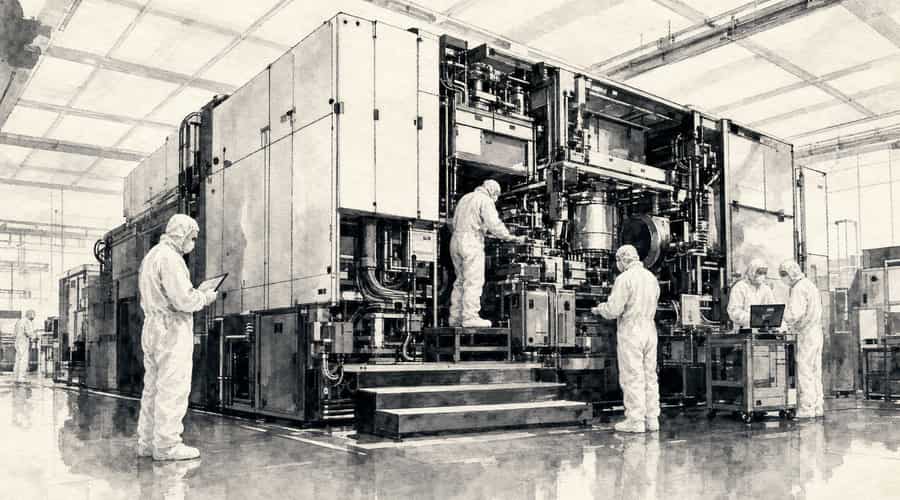
ASE Technology, the world's largest chip packaging company, has raised its 2026 capex target to $8.5 billion as demand for AI chip packaging continues to overwhelm supply. With LEAP revenue projected to grow 118% year on year and co-packaged optics entering mass production, ASE is emerging as the most consequential chokepoint in the AI semiconductor supply chain.
How to get into Y Combinator is one of the most searched questions in startup circles, and most founders are preparing for the wrong things. The acceptance rate hovers below 1%, the application is a plain text form with no deck required, and what separates the companies that get in has almost nothing to do with market size analysis or famous advisors.
Zhipu AI, whose Hong Kong-listed shares have surged roughly 2,400% since its January 2026 debut, is planning a $2.2 billion follow-on listing on Shanghai's STAR Market after its GLM-5.2 model pushed its market cap past HK$1 trillion. The move tests whether investor conviction can survive dilution at a valuation exceeding 1,200 times trailing revenue.
Meta launched its own-branded smart glasses today starting at $299, severing its dependency on the Ray-Ban name while keeping EssilorLuxottica as its manufacturing partner. The Adventurer, Fury, and Kylie Jenner Starfire models run Muse Spark AI for real-time translation, object identification, and voice commands, and land $80 cheaper than the Ray-Ban Meta entry point. The move puts direct pressure on Snap's $2,195 Specs and signals Meta believes wearable AI is ready to sell on its own terms.
Allium, a New York blockchain data startup, closed a $40 million Series B led by Amplify Partners, bringing total funding to $61.5 million. With clients including Visa, Stripe, and the U.S. Federal Reserve, Allium provides audit-grade onchain data infrastructure at a moment when the CLARITY Act is pushing compliance teams to get serious about blockchain data provenance.
Revenue based financing for startups is one of the most practical and overlooked funding tools available, offering capital without equity dilution and repayment terms that flex with your revenue. For founders with predictable, recurring income who don't want to give up ownership, it frequently beats both traditional debt and venture equity on pure economic terms.
Five former Ethereum Foundation researchers launched Ethlabs on June 22, an independent non-profit R&D lab backed by Bitmine, SharpLink, and Consensys founder Joe Lubin. The launch comes as at least eight senior EF contributors departed in 2026, raising urgent questions about where Ethereum's protocol research now lives and whether corporate-backed funders with billions in ETH holdings can stay genuinely independent from the research they fund.
Insilico Medicine and SK Biopharmaceuticals announced a $2.5 billion collaboration at BIO 2026 targeting neuroimmune CNS disorders, with just $18 million paid upfront and the rest tied to milestones. The deal structure reveals how pharma is treating AI drug discovery platforms: as high-upside options on unproven pipelines, not proven molecules.
Six months after licensing its LPU chip technology to Nvidia for $20 billion, Groq has raised $650 million from existing investors to reinvent itself as an AI inference cloud provider. With most of its founding team now inside Nvidia and competition from Cerebras, SambaNova, and the hyperscalers intensifying, the company's neocloud pivot is as much a survival strategy as a growth play.
Fomo, the cross-chain social crypto trading app built by former dYdX engineers Paul Erlanger and Se Yong Park, has raised a new round at a $550 million valuation led by Index Ventures and Union Square Ventures. The startup has crossed $1.5 billion in trading volume and 250,000 users since its $17 million Benchmark-led Series A in November 2025. The raise signals growing generalist VC conviction in consumer on-chain trading as DEX volume hits record highs.
Tencent is internally testing an AI agent embedded inside WeChat that lets 1.4 billion users complete real-world tasks through natural language, without leaving the app. The announcement sent Tencent shares up 10.5 percent and added $53 billion in market cap, while raising pointed questions about whether standalone AI apps like Doubao and Kimi can compete with ambient, infrastructure-level distribution.
Z.ai released GLM-5.2, a 744-billion-parameter open-weights model under MIT license, on the same day the US banned Anthropic's Fable 5 for foreign users. The model beats GPT-5.5 on coding benchmarks at one-sixth the API cost and is freely self-hostable with no regional restrictions, reshaping the infrastructure calculus for developers building outside the US.
How to start a newsletter business the right way means treating monetization as architecture from day one, not something you figure out after you've built an audience. Morning Brew designed its revenue model early and sold to Business Insider's parent company for a reported $75 million. Here's what that sequencing looks like when you're starting from zero.