A viral Reddit post claims ChatGPT's new image model can handle math better than most people, but the real story is more useful than that. Visual AI is getting better at structured reasoning, and founders now need better ways to test where the reasoning actually happens.
The claim took off because it was simple, flattering to the machine, and just uncomfortable enough for humans. A post on r/singularity titled ChatGPT's image model is better at math than most people drew 124 points and 72 comments within five hours on May 9, after showing a generated image with a proof involving the greatest common divisor and Euler's totient function.
That is not basic arithmetic. The identity, which says the sum of gcd(k,n) from 1 to n equals the sum over divisors d of n of d times phi(n/d), is a standard number theory result. A person who has taken calculus, statistics, or even differential equations may never have touched it. That helps explain the split in the thread: some users saw a real leap in AI math, while others pointed out that most people are not a serious benchmark for number theory.
The underlying model appears to be ChatGPT Images 2.0, powered by OpenAI's gpt-image-2. OpenAI introduced it on April 21, and its own system card describes a major improvement in world knowledge, instruction following, dense text generation, and a thinking mode that can use reasoning and tools before producing an image. In plain English, the system is no longer just painting from a prompt. It can plan, check, and structure an output before the image is rendered.
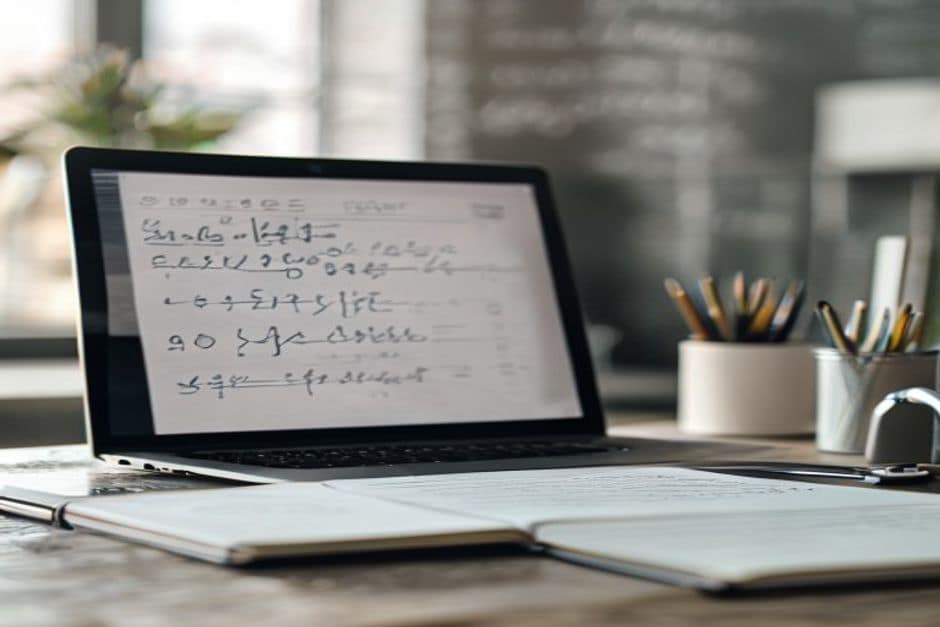
That distinction matters. If a user asks for an image of a textbook page containing a proof, the impressive part may not be the image model discovering the proof from pixels. It may be a reasoning model drafting the proof, then passing the final text to an image generator that has become much better at placing legible symbols on a page. That is still progress. It is just a different kind of progress than the headline suggests.
For startups, the useful question is not whether ChatGPT Images is better at math than most people. A calculator clears that bar. The useful question is whether a multimodal system can reliably move between visual layout, symbolic notation, and mathematical structure without losing meaning. That is the gap many products still struggle with.
Education software is the most obvious market. A tutor that can read a student's handwritten solution, detect where the reasoning breaks, and respond with a diagram or corrected visual explanation is much more valuable than a chatbot that only gives final answers. But the Reddit example does not prove that end to end capability. It shows that the system can render a plausible mathematical artifact when prompted well enough.
There are several ways a demo like this can look stronger than it is. The model may have seen similar identities in training data. The prompt may have included enough scaffolding to point it toward the standard proof. A text reasoning model may have solved the problem before the image stage began. Or the generated page may simply contain a convincing proof that still needs expert checking line by line.
None of those caveats make the advance meaningless. Earlier image generators were notorious for mangled words, broken equations, and layouts that collapsed under detail. A system that can put coherent mathematics into an image is useful for worksheets, slides, textbooks, research posters, product mockups, and scientific diagrams. The market does not need magic to change behavior. It needs tools that are reliable enough to save time.
Founders Need Tests Not Vibes
The founder mistake is to treat a viral screenshot as product evidence. A better test starts with fresh problems, hidden prompts, and independent grading. If a company wants to claim that its multimodal agent can do math, it should separate three tasks: reading the problem from an image, solving the problem in text, and rendering the solution back into a visual format. Each should be scored on its own.
That separation is important because customers will not care where the failure begins. A teacher using an AI worksheet tool needs the equation to be correct, the explanation to be appropriate for the grade level, and the final image to be readable. A design team using AI to create technical diagrams needs labels, units, proportions, and constraints to survive revisions. A lab workflow needs the model to preserve notation and not invent steps that sound elegant but are false.
The same logic applies to scientific and engineering workflows. Multimodal agents are attractive because real work rarely arrives as clean text. It comes as screenshots, whiteboards, lab notes, CAD exports, messy PDFs, and half finished diagrams. If image capable models are becoming more dependable at structured reasoning, they can reduce the friction between seeing a problem and acting on it.
But founders should benchmark against the work their users actually do. A beautiful proof of a known theorem is less informative than 200 routine failures and edge cases from a real classroom, design studio, or research group. Can the model handle bad handwriting? Can it tell a wrong proof from a short proof? Can it preserve the same symbol across a diagram, caption, and answer key? Can it say it is unsure?
The Reddit thread is useful because it points to a real shift in expectations. Users are no longer impressed only by pretty images. They are starting to expect image systems to reason, format, verify, and explain. That raises the bar for OpenAI, Google, Anthropic, and the startups building on top of them.
The next signal to watch is not another viral claim that AI is better than humans at math. It is whether visual models can pass boring, repeatable, domain specific tests where correctness matters more than surprise. That is where product value will show up first.
Also read: Humanoid robot fights are becoming startup marketing with bruises • AI startups are learning that fluent models still fail at logic • Data centers are turning power into the next AI bottleneck