CoreWeave’s demand story is no longer just about GPUs and customers. It is now about how much risk credit markets are willing to take to keep the AI infrastructure race moving.
A Chicago-area data center tied to CoreWeave has pushed deeper into the high-yield market, raising $900 million through five-year notes issued by Elk Grove Village Property LLC, an indirect subsidiary of Prime Data Centers. The deal matters because it shows where the AI buildout is really being financed: not only in venture rounds, public equity, or Nvidia-backed capital, but in leveraged real estate structures built around long-term leases.
Bloomberg reported that the notes priced at par to yield 7.5%, at the low end of talk, with Banco Santander managing the sale. The offering was increased by $50 million from the amount first discussed, a small but telling detail. Investors did not just tolerate the risk. They absorbed more of it.
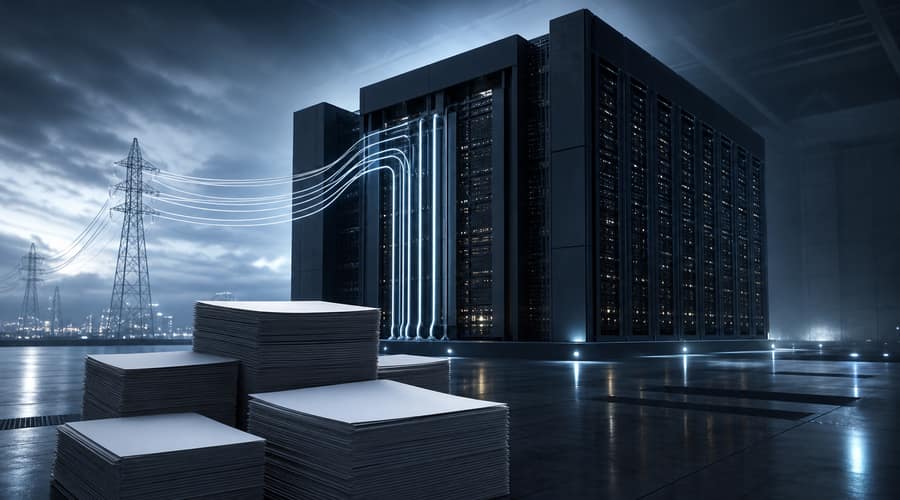
The facility is a build-to-suit hyperscale data center in the Chicago metropolitan area, fully leased to CoreWeave for 15 years. That lease is expected to represent about $2.2 billion in revenue. For Prime Data Centers and its property vehicle, the logic is straightforward: lock in a large AI cloud tenant, borrow against the contracted cash flows, and use the bond market to turn future rent into current construction capital.
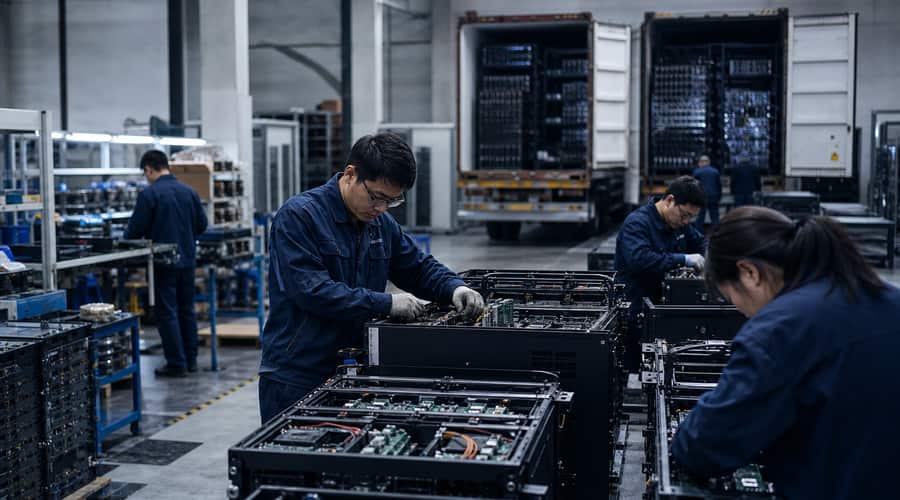
This is the less glamorous side of artificial intelligence, but it may be the side that decides who wins. Models need chips. Chips need power, cooling, land, fiber, substations, and buildings that can be delivered before demand moves elsewhere. The cost of that physical layer is enormous, and it does not wait politely for software margins to arrive.
CoreWeave has become one of the clearest examples of that pressure. The company reported $2.1 billion of first-quarter 2026 revenue, up sharply from a year earlier, and said its revenue backlog reached $99.4 billion as of March 31. It has also been scaling power capacity at a pace few cloud companies can match, with more than 1 gigawatt of data center capacity and a target of 1.7 gigawatts by the end of 2026.
Those numbers explain why lenders are interested. They also explain why the financing has become more complicated. CoreWeave’s customers want capacity now, but the infrastructure has to be paid for before it is fully earning revenue. That gap is where high-yield bonds, asset-backed loans, GPU-backed facilities, and project-level debt enter the story.
There is nothing inherently wrong with that. Real estate and infrastructure have always used debt against contracted cash flows. What is different here is the speed of the AI cycle, the concentration of demand, and the credit profile of some of the companies sitting at the center of it. S&P Global Ratings assigned Elk Grove Village Property’s senior secured notes a preliminary BB- rating and pointed to both the strength of the 15-year lease and the risk of relying on CoreWeave as the single tenant.
Bond buyers are betting on more than rent
The key question is not whether CoreWeave needs more capacity. It clearly does. The question is what happens if today’s demand assumptions change before the debt has been refinanced, amortized, or absorbed by operating cash flow.
S&P’s analysis is useful here because it does not treat the lease as risk-free. The agency said CoreWeave is rated B+ with a positive outlook, while the project rating sits higher because the site could potentially be re-leased to another tenant in a strong data center market. That is the bondholder argument in plain terms: even if the tenant becomes a problem, the building may still be valuable.
That argument has limits. The notes have a five-year term, while the initial lease runs 15 years. S&P noted that only about 20% of the project-level debt is scheduled to amortize during the five-year term, leaving a much larger amount to be refinanced. If credit conditions are friendly, that may be routine. If rates rise, AI demand cools, or lenders become more selective, refinancing becomes the test.
Power is another practical risk. The Elk Grove project relies on ComEd infrastructure, including a new onsite substation expected to support long-term supply. Three data halls are already complete, with the remaining halls scheduled to come online in stages. For AI data centers, construction progress is only part of the job. The real asset is powered capacity, and the grid is increasingly the bottleneck.
For StartupFortune readers, the bigger signal is that the AI trade is spreading across capital markets. Equity investors are buying growth. Chipmakers are supporting demand. Banks and bond funds are financing the buildings. Local utilities and municipalities are being pulled into the same machine through power planning and tax incentives.
That makes CoreWeave’s rise more durable in one sense and more exposed in another. The company is no longer just proving that customers want specialized AI cloud infrastructure. It is also proving whether the credit market can keep funding that infrastructure at a price the business can bear.
The next thing to watch is not only CoreWeave’s revenue growth or backlog. Watch the yield on the debt behind the data centers, the pace of refinancing, and whether bond buyers keep treating long-term AI leases as infrastructure-grade cash flow. That is where confidence in the AI boom is quietly being priced.
Also read: Palo Alto Networks shows how AI is changing cybersecurity spending. • Microsoft sets a 2029 target with Majorana 2 • Google will warn Android users when scammers fake a contact’s call