Microsoft says Majorana 2 is 1,000 times more reliable than its first topological quantum chip, and it is now aiming for a commercially useful quantum computer by 2029.
Microsoft has put a harder date on one of the most difficult bets in computing. With Majorana 2, the company is not only asking investors and scientists to believe in topological qubits. It is also arguing that agentic AI can speed up the slow, expensive work of turning fragile lab hardware into something useful.
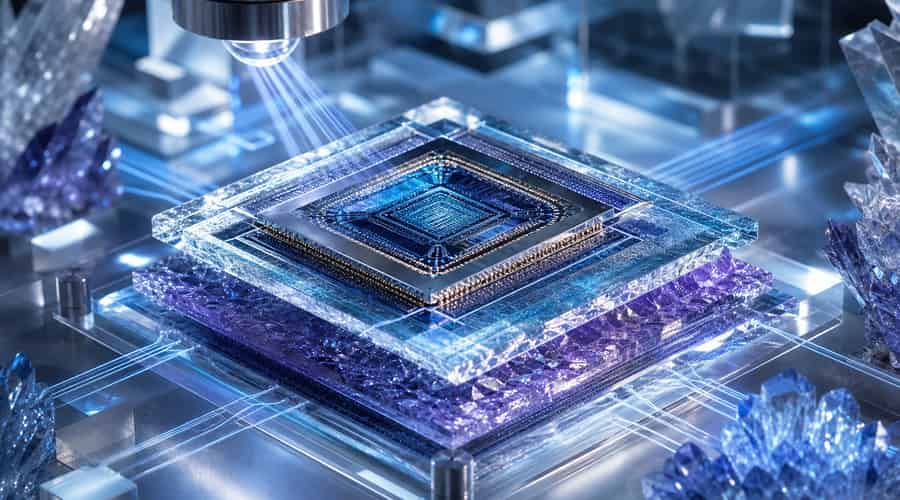
The claim is big enough to matter. Microsoft says the new chip uses a lead-based materials stack, replacing the aluminum used in Majorana 1, and that its qubits are 1,000 times more reliable than the prior generation. The company says the mean qubit lifetime is 20 seconds, with some instances lasting as long as one minute. It also says the chip supports one-microsecond operations and qubits about one-hundredth of a millimeter in size.
That is not a small technical improvement. In quantum computing, qubits are powerful because they can represent more than ordinary binary information, but they are also notoriously easy to disturb. A longer-lived qubit gives researchers more room to measure, control and eventually correct errors. The practical question is whether those gains can be turned into reliable logical qubits and then into systems that solve real problems better than classical machines.
According to a report from Reuters, Microsoft is now targeting 2029 for a scalable quantum computer that could be commercially valuable, putting its timetable closer to the roadmaps being promoted by IBM, Google, Amazon and major Chinese research groups. That matters because quantum is no longer only a physics contest. It is becoming a capital allocation story, with cloud platforms, chip teams and governments all trying to decide which architectures deserve serious money.
The most interesting part of Microsoft's announcement may be the role it gave to AI. The company says Microsoft Discovery, its agentic AI platform for research and development, helped its quantum team manage workflows, automate measurements, optimize fabrication and spot device flaws that might otherwise have stayed buried in experimental data.
That framing is important because quantum hardware is not software with colder rooms. It depends on materials that behave correctly at extreme precision, manufacturing steps that can fail because of tiny defects and teams spread across physics, chemistry, engineering and chip fabrication. If AI can help researchers connect two decades of data across those disciplines, the value is not that it replaces the lab. The value is that it makes the lab less blind.
Microsoft says lead helps shield fragile qubits from disturbances, including cosmic radiation, but the material also brings tradeoffs. The hard part was not simply choosing lead. It was finding a manufacturing recipe that could use it without breaking the device quality that quantum hardware needs. That is where the company says simulations, automated measurements and agent workflows helped narrow the search.
The Scientific Question Has Not Gone Away
Microsoft's approach depends on Majorana quasiparticles, which are expected to help protect quantum information from noise. That is the promise of topological quantum computing. It is also why the scrutiny is so intense. If the physics is right, Microsoft may have a path to smaller and more reliable quantum systems. If the evidence is incomplete, a 2029 target becomes a very expensive engineering plan built on a contested foundation.
Physicists have already challenged parts of Microsoft's Majorana work, arguing that the company has not released enough public data for outside researchers to fully reproduce or verify the central claims. Microsoft says some information is protected by trade secrets, while data has been shared confidentially with DARPA as part of a government evaluation of competing quantum approaches.
This is the tension readers should focus on. A company can be right to protect manufacturing knowledge and still leave the wider scientific community short of what it needs. That is especially true in quantum, where small measurement choices can change how convincing a result looks. The commercial story wants speed. The scientific story still wants replication.
The potential rewards explain why this debate will not stay inside academic circles. Useful quantum computers could change drug discovery, materials science, optimization and parts of cybersecurity. They could help simulate molecular systems that classical computers struggle to model. They could also push governments and companies to prepare for future cryptography risks before they become practical problems.
But usefulness is the key word. A chip with better qubit lifetime is progress only if it helps build reliable logical qubits and machines that outperform classical systems on meaningful tasks. Microsoft has made quantum computing feel closer, and it has given AI a more visible role in one of technology's hardest engineering races. The next thing to watch is not another bold date. It is whether outside validation starts to catch up with the claims.
Also read: Google will warn Android users when scammers fake a contact’s call • Perplexity turns the AI PC into a cloud traffic controller • China has put reusable rockets back in focus with Long March 12B