With silver prices holding near multi-year highs, the difference between a sterling piece and a silver-plated one can mean hundreds of dollars , and knowing how to check both matters more than ever.
Every few weeks, a photo of a tarnished spoon or a dusty coin appears on Reddit or TikTok with the same anxious caption: is this actually silver, and if so, should I be doing something about it? It's a fair question, and right now , with spot silver trading in the $28-$34 range driven by solar manufacturing demand, inflation hedging, and tightening supply out of Mexico and Peru , it's a financially meaningful one. Getting the identification wrong in either direction costs you real money.
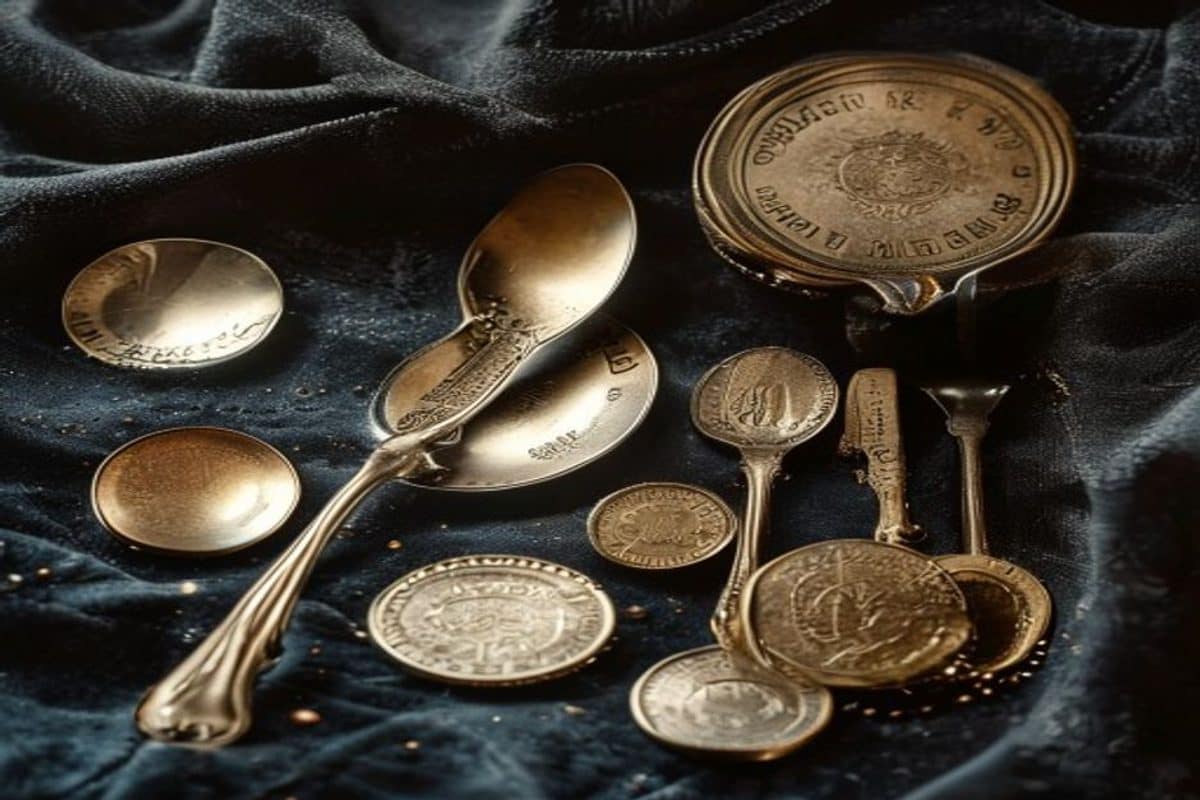
The first hurdle is authentication, and it's more straightforward than most people realize. Genuine silver items are almost always marked. On American and British antiques, look for stamps like "925," "Sterling," "999," or the British lion passant hallmark. Items bearing "EPNS" (electroplated nickel silver) or "Silver Plate" are telling you upfront they're not solid silver , the base metal is just wearing a thin coating. Beyond hallmarks, a strong rare-earth magnet will quickly reveal most imposters: silver is non-magnetic, so any noticeable pull suggests a ferrous core. For items with no clear markings, a jeweler's acid test or professional assay gives a definitive answer for under $20.
Once you've confirmed genuine silver, melt value becomes your baseline , not your ceiling. Melt value is simple arithmetic: fine silver weight in troy ounces multiplied by spot price. A 100-gram sterling (.925) piece at $31/oz is worth roughly $92 at melt. That's not nothing, but it may be well below what a knowledgeable buyer would pay.
Pre-1965 U.S. coinage , dimes, quarters, half dollars struck in 90% silver, commonly called "junk silver" , routinely trades at a modest premium to melt because demand from stackers and preparedness communities keeps a floor under prices. But the real upside lies elsewhere. Hallmarked antique silverware from makers like Tiffany and Co., Georg Jensen, or the English silversmith Paul Storr can fetch multiples of melt at auction. A Georg Jensen serving piece in excellent condition might carry a maker's premium of 300% or more over its silver content alone. The maker's mark, the pattern name, and the condition all feed into that calculation.
Coins with rare dates or low mintage figures occupy a different universe entirely. A 1916-D Mercury dime in fine condition is worth thousands regardless of silver's spot price on any given Tuesday. If you're sorting through a coin collection, cross-reference dates and mint marks against PCGS or NGC population data before you make any decisions. Grading services charge for formal attribution, but their online price guides are free and cover most common issues.
Where Collectors Actually Sell
The secondary market for silver above melt has matured considerably. eBay's completed listings function as a real-time price guide , search the item, filter by "sold," and you'll see what the market actually cleared, not just what sellers hoped for. APMEX and similar bullion dealers buy at a discount to spot for generic silver but will pay stronger premiums for recognized coins and rounds. For antique silverware, specialist auction houses and estate sale platforms consistently outperform pawn shops and generic online marketplaces, where buyers tend to price in maximum uncertainty.
The practical takeaway heading into the rest of 2026 is this: silver at current prices rewards the collector who does five minutes of homework before selling. Industrial demand from the energy transition is not a short-term story , analysts tracking solar panel production capacity see sustained silver consumption well into the next decade, which argues against panic-selling anything at melt just because a dealer offers a quick check. Verify the hallmarks, check for a maker's name, run the date on any coins through a population report, and then decide. The floor is higher than it used to be, and for the right pieces, so is the ceiling.
Also read: Silver's quiet comeback is turning into something retail investors cannot ignore • Silver's quiet comeback is turning into something retail investors cannot ignore • A sudden suspension of Silver Maple Leaf sales at JM Bullion exposes widening cracks in the physical silver supply chain as investors scramble to secure inventory.