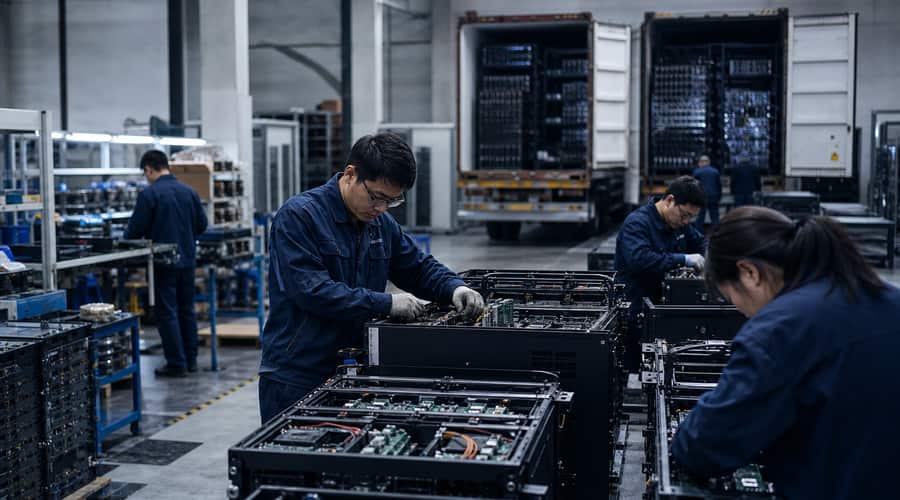
Hut 8 has signed a 15-year lease worth at least $9.8 billion for a 352 MW AI data center at Beacon Point in Nueces County, Texas, turning a company once known for bitcoin mining into a landlord for hyperscale AI compute and showing how power, land, and grid access are being financialized into long-duration infrastructure revenue.
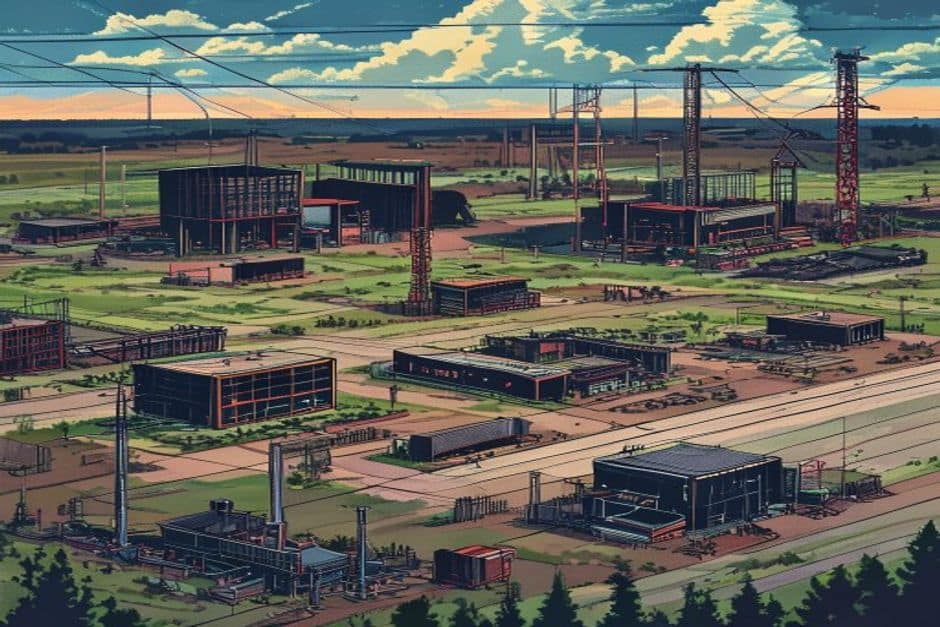
The details matter because this is not a vague AI partnership or a one-off hosting deal. Hut 8 said the lease is for a 352 MW buildout at Beacon Point, a 1 GW campus in Nueces County, Texas, and the counterparty is a confidential, high-investment-grade tenant that will deploy dedicated compute infrastructure for AI training and inference. Bloomberg reported that the agreement runs for 15 years and starts at a base-term contract value of at least $9.8 billion. Hut 8 also said the figure could rise to $25.1 billion if the tenant exercises all three five-year extensions, which means the true economic value depends on renewal behavior, power delivery, and whether the AI demand curve stays hot enough to justify locking in capacity for that long. The first data hall is expected in Q3 2027, with initial energization tied to an interconnection agreement for 1,000 MW of utility capacity and an initial power-up timeline in early 2027.
That makes Hut 8 a useful case study in what happens when crypto infrastructure gets repurposed for AI. The company built its reputation in the bitcoin mining world, where the skill set was always less about coins and more about power procurement, cooling, land selection, and operating large energy-intensive facilities. Those same capabilities are suddenly valuable in AI, but the business model changes once a tenant signs a long-term lease instead of buying hash-rate output. A mining company earns revenue by running equipment it controls. A data center landlord earns revenue by controlling the physical substrate that someone else's compute sits on top of. That is a much more predictable and financeable cash-flow profile, which is why Wall Street is starting to treat former miners less like speculative crypto proxies and more like infrastructure operators with contracted AI exposure.
The Beacon Point deal follows a pattern that is becoming easier to see across the sector. As post-halving economics pressure bitcoin miners and AI demand keeps driving hyperscale buildouts, companies with cheap power, available land, and the ability to deliver utility-scale campuses are shifting into a different lane. Hut 8 is not alone. Other mining-adjacent firms have been trying to reposition around data center hosting, power access, and compute real estate. The logic is simple. If you already own the hard parts of the physical stack, you may be better off renting them to AI labs and cloud customers than chasing mining margins that get squeezed every halving cycle. That is why this story is about more than a single lease. It is about the asset class changing underneath the same balance sheet.
The economics are also telling. Hut 8 said the Beacon Point transaction expands its total contracted AI data center capacity to 597 MW with aggregate base-term contract value of about $16.8 billion, and expected average annual NOI of around $1.1 billion. Those are numbers that begin to look more like a utility or large industrial landlord than a former bitcoin miner. The question investors have to ask is whether those figures represent durable, repeatable cash flow or whether they are being marked at a point in the AI cycle when hyperscaler demand is still doing the heavy lifting. In other words, are these leases the start of a stable infrastructure business, or the beginning of a new bubble built on the assumption that every serious AI workload will keep needing more and more third-party capacity for a decade? The answer likely depends on whether the tenant is a cloud giant, an AI lab, or a financially structured compute operator, and whether the lease terms remain intact when the current urgency around capacity cools.
For San Francisco readers, the broader lesson is that the AI economy is starting to reward companies that can own the bottlenecks, not just the models. Power, cooling, interconnection, and land access are turning into the new bargaining chips. Hut 8 is showing that a company with the right sites and the right balance sheet can step into that role even if it came from an entirely different industry. That has implications for valuation too. A miner that can turn itself into an AI infrastructure landlord may deserve a very different multiple than one that is still trading on crypto exposure alone. But it also means the market has to decide how much of that multiple is backed by contract quality and how much is simply enthusiasm for anything adjacent to AI. The answer will shape how the next generation of infrastructure companies is financed, because if the lease-backed model works, more former miners will become landlords. If it does not, the same companies may discover that financializing compute capacity is easier to announce than to sustain.
Also read: Bristol Myers Squibb shows why pharmaceutical factories are ahead of the rest of American manufacturing on AI • SpaceX's Terafab plan shows the startup economy is becoming a factory economy • Tencent's AniMatrix reframes generative video as a medium-native production tool not a physics engine