Mecka AI's $60 million raise shows that humanoid robotics is no longer just a hardware race. The next fight is over who owns the human movement data that teaches robots how the real world works.
Mecka AI has raised $60 million to build what it calls the data layer for physical AI, a bet that the humanoid robot boom will need more than better motors, cameras and foundation models to become a real market.
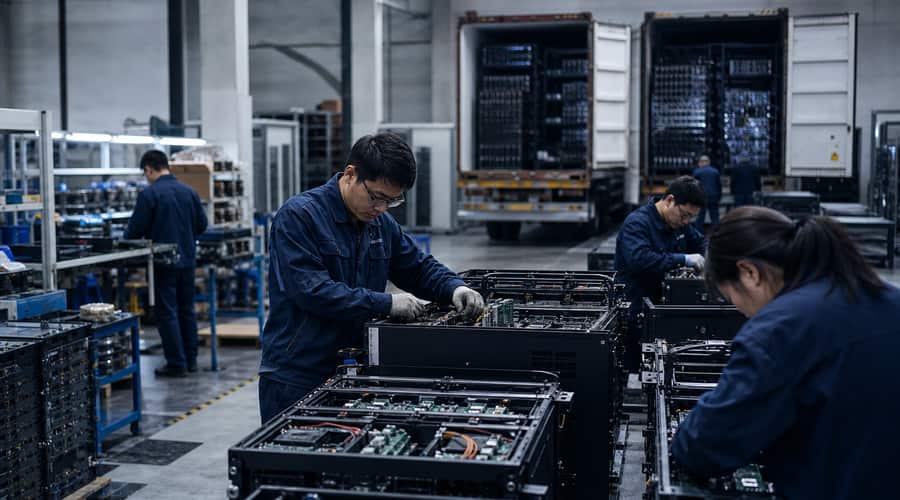
The New York startup is trying to capture the fine details of human motion directly from people, using body sensors and iPhones to record gestures, walking patterns and task behavior that robots can learn from. That sounds narrow until you look at what humanoid robotics is missing. Robots can now walk, grasp and follow instructions in controlled demonstrations. The harder problem is getting them to work reliably in homes, warehouses and factories where lighting changes, objects shift and humans do things in messy ways.
According to Fortune, Mecka's funding includes a $25 million Series A round closed in November and a $35 million follow-on investment, with Framework Ventures leading and Menlo Ventures, SV Angel, Kindred Ventures and former Google DeepMind researcher Ted Xiao also participating. CEO Josh Gao declined to disclose the valuation, but said the company is projecting a $100 million annual run rate from signed contracts.
That is the part investors will notice. Mecka is not selling a robot. It is selling the input that could make many robots useful.
Humanoid robotics has attracted huge checks because the opportunity is easy to understand. If machines can operate in human-designed spaces, they can use existing tools, move through existing buildings and take on work that has resisted traditional automation. The issue is that a human-shaped robot is only as good as the training data behind it.
Simulation helps. Teleoperation helps. Fleet data from deployed robots helps once there is a fleet large enough to learn from. But the market is still short on high-quality physical behavior data, especially the kind that captures how people naturally move through tasks without a robot in the loop.
That is where Mecka is trying to stand apart. The company says its approach is built around human-sourced sensor data rather than relying mainly on synthetic environments or robot teleoperation. It has also been involved with EgoVerse, an egocentric human dataset for robot learning developed with academic and industry partners including Georgia Tech, ETH Zurich and Scale AI. The point is not just to record video. The point is to turn human activity into structured signals a robot model can use.
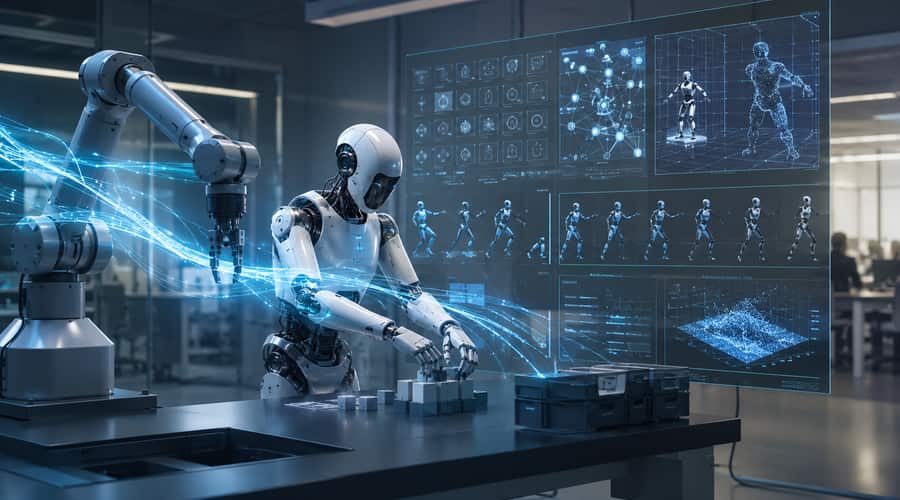
This makes Mecka different from companies building the full robot stack. Figure AI, for example, is pushing its own humanoid system with Helix 02, a model the company says uses more than 1,000 hours of joint-level retargeted human motion data along with reinforcement learning to control a full robot body. Physical Intelligence is working from another angle, developing general robot foundation models such as pi0 and pi0.7 that can generalize across tasks and robot bodies using diverse robot data and other sources.
Mecka is not trying to win that race by making the most visible robot. It is trying to become useful to everyone running that race.
Why this matters for founders and investors
The obvious question is whether Mecka becomes a standalone infrastructure company or an acquisition target. If humanoid makers decide that proprietary data is their main defensible asset, they may prefer to buy data pipelines rather than depend on outside vendors. That is especially true for hardware companies trying to move from lab demos to commercial deployments in logistics, elder care, retail or manufacturing.
There is also a privacy and labor angle that cannot be ignored. A business built on recording human movement needs clear consent, strong data governance and careful customer controls. The physical AI market will not get the same pass that early web data collection often received. When the data is a person's body, workplace and routine, the trust bar is higher.
Still, the commercial logic is strong. Foundation model companies learned that data supply chains become strategic once model architectures start to converge. Robotics may follow the same pattern, only with a harder collection problem. Text and images already existed on the internet. Useful robot training data has to be gathered, cleaned, labeled, aligned to physical actions and tested against machines that can fail in expensive ways.
That is why a $60 million raise for Mecka is more than another robotics funding headline. It suggests venture capital is beginning to price the picks and shovels of embodied AI separately from the robots themselves. The company now has to prove that its human data can consistently improve real-world performance, not just look compelling in a dataset browser.
If Mecka can do that, it could sit in a valuable position between AI labs, humanoid manufacturers and enterprise customers trying to automate physical work. If it cannot, the market will keep folding data collection back into the largest robotics platforms. Either way, the message is clear: in physical AI, the company that understands human movement may have as much leverage as the company that builds the robot.
Also read: Bain says AI savings are still missing the profit line • ChatGPT is testing a small fix for long conversation threads • Nvidia uses Computex to make the AI PC fight much harder