Nvidia is spending like a company that wants to own the rails of AI, not just sell the picks and shovels.
Jensen Huang's recent dealmaking has turned that idea into something concrete. According to the Financial Times, Nvidia has committed roughly $90 billion across investments and strategic agreements tied to AI infrastructure, a scale that goes well beyond the usual chip-supply relationship and into the plumbing of the industry itself.
That matters because Nvidia is no longer operating as a simple vendor to the AI boom. It is becoming one of the forces deciding where compute gets built, who gets access to it, and which companies can afford to keep pace. For startups, cloud providers, and enterprise buyers, the implications are obvious: the company that makes the most important chips is also helping shape the market around them.
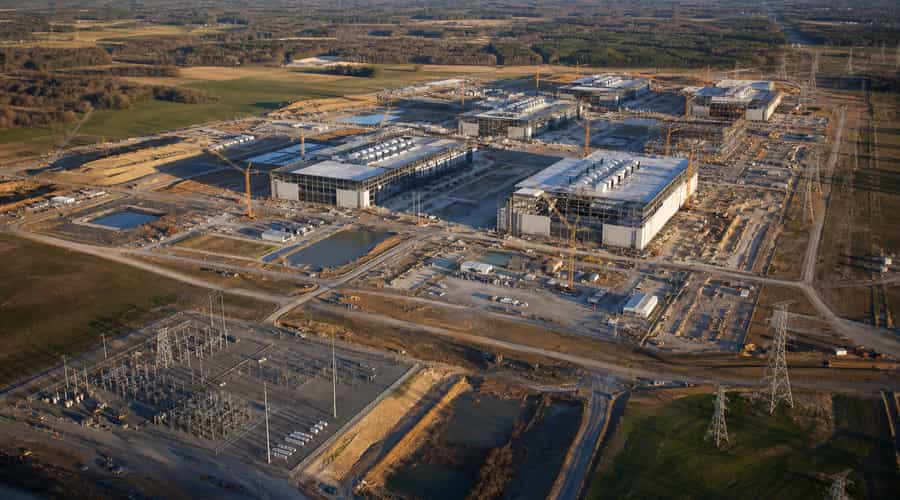
The latest wave of activity has come fast. Reuters reported in March 2026 that Nvidia would invest $2 billion in Nebius, the AI cloud firm that sells infrastructure capacity to customers building and running model workloads. In May, Reuters reported that Nvidia and Corning would partner to expand U.S. production of optical connectivity products for AI data centers, and later noted that Nvidia had made a multi-billion-dollar prepayment alongside an equity stake of up to $3.2 billion. Nvidia also moved into power-rich data center development through a recent IREN agreement that gives it a path to invest up to $2.1 billion, another sign that the company is following AI infrastructure all the way down to the physical layer.
Those moves sit alongside a broader pattern that has been building for months. Nvidia agreed in September 2025 to invest $5 billion in Intel, giving it roughly 4 percent of the company after new shares are issued, according to Reuters. Around the same period, Nvidia and OpenAI announced a partnership that could see Nvidia invest up to $100 billion as OpenAI builds new data center capacity using Nvidia systems. The direction of travel is hard to miss, Nvidia is embedding itself inside the ecosystem that depends on its hardware.
This is what makes the current strategy different from the old semiconductor playbook. Historically, chip companies made money by selling product, winning design slots, and defending margins. Nvidia is still doing that, but it is also taking stakes, funding capacity, and locking in demand across the stack. That creates a tighter loop between spending and revenue, while also giving the company more influence over how AI infrastructure develops.
It also helps explain why so many of these agreements are structured around long-term capacity, not just immediate sales. The AI race has become a capital-intensity contest, and the players with the deepest pockets are increasingly the ones able to secure access to power, fiber, cloud infrastructure, and specialized compute. Once those assets are spoken for, smaller competitors can find themselves squeezed out long before a product ever reaches market.
That is the real significance of Huang's deal spree. It is not simply about Nvidia adding more logos to a slide deck. It is about building a distribution system for AI where Nvidia sits near the center of major transactions, from chip supply to cloud capacity to the infrastructure that moves data around the model layer.
The Financial Times framing is useful here because it captures the scale of the ambition. Roughly $90 billion is not a defensive adjustment. It is a market-making statement. Nvidia appears to be using its extraordinary balance-sheet strength and cash generation to secure the ecosystem around its products before rivals, customers, or regulators can force a different shape on the market.
What buyers should watch
For enterprises, the practical question is not whether Nvidia can afford this strategy, it clearly can, but what kind of market it creates. Concentrating so much capital and capacity around one company can improve execution, speed up deployment, and make AI infrastructure easier to build. It can also reduce bargaining power for buyers who need compute but do not have the scale to negotiate from strength.
Startups may feel that pressure first. Access to affordable compute already shapes which teams can train, fine-tune, and deploy serious models. If Nvidia's partners control more of the infrastructure stack, then pricing, availability, and terms could become even more closely linked to the company's broader ecosystem. That may be efficient in the short run. It is less comfortable if you are trying to build an independent AI business without deep capital.
Investors should also pay attention to the competitive signal. Nvidia is not acting like a company that expects a normal chip cycle. It is acting like a platform owner trying to secure network effects in a market where compute is becoming the new scarce resource. That is a stronger position, but it also makes the company more exposed to scrutiny if customers start to worry about dependency, concentration, or the terms of access.
For now, though, the message is clear. Nvidia is using its market power to move from the edge of the AI boom to the center of it. The company that once sold the hardware for the revolution is now helping finance the infrastructure, shape the partnerships, and define who gets to participate on favorable terms.
Also read: China's Nvidia chip ban shows how far the tech fight has widened • GitHub breach shows how one bad extension can reach deep inside software teams • South Korean funeral firm's Ether bet shows how leverage can travel far