Tesla's robotaxi expansion into Orlando and Tampa is real, but the published numbers don't support the victory lap. You can see progress here, and you can also see how much of the Cybercab story still depends on proving scale outside the cleanest early markets.
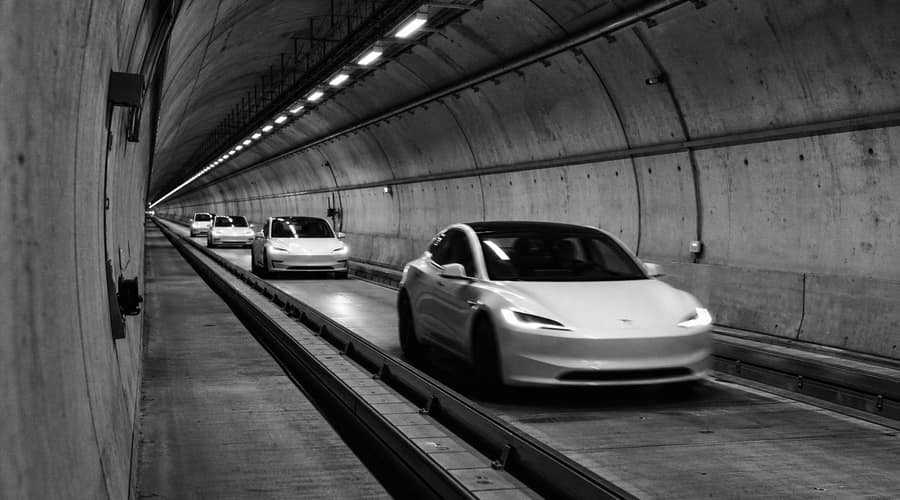
Tesla put Orlando and Tampa on its robotaxi map on July 21, one day before its second-quarter earnings call. That's the hook. The company is no longer talking only about Austin and a narrow pilot route. It is trying to show you a network forming city by city, even while the details underneath remain thinner than the headline suggests.
The Verge reported that Tesla shared service-area maps for both Florida cities but did not disclose fleet sizes or availability details. That distinction matters. A map is a public signal. A working fleet with repeatable wait times, published capacity and clear operating rules is something else. Tesla wants investors to read Orlando and Tampa as rollout momentum. You should read it as progress with missing numbers.
The rollout is moving, but not evenly
Business Insider reported, based on Tesla's Q2 update, that the robotaxi service has reached seven U.S. metropolitan regions, including Orlando and Tampa, and has logged nearly 2.5 million paid miles since launch. Tesla also said more than 380,000 of those miles were unsupervised across six cities. That is real progress. A year ago, the robotaxi argument was still mostly a promise wrapped around demos and Elon Musk's timelines.
Still, the original claim that Orlando and Tampa are already running full unsupervised rides with no safety driver and no remote human monitoring goes too far. The public reporting doesn't prove that. The Verge's follow-up coverage said Tesla's unsupervised fleet remains small compared with the way the company talks about national scale, and it described continued reliance on remote operation in some cases. If you're judging the business, you can't blur those two things together. Paid miles are useful. Truly driverless, repeatable, regulator-approved service is the harder test.
The city count also needed tightening. The article said eight cities were active or imminent and included Phoenix alongside Austin, San Francisco, Dallas, Houston, Miami, Orlando and Tampa. Business Insider put the current operating footprint at seven metropolitan regions, while MarketWatch reported that Phoenix and Las Vegas were still being prepared. That's a different story. Preparation is not operation.
Look at the timing. Tesla announced the Florida expansion just before earnings, when the company badly needed autonomy to carry the market's attention. Vehicle deliveries were strong, but the core auto business is no longer enough to explain Tesla's valuation by itself. Robotaxi has to become more than a narrative. It has to become a business line you can see in the accounts.
The cost case is stronger than the earnings case
The strongest argument for Tesla is still cost. The Information reported that Morgan Stanley analysts estimated Tesla's robotaxi operating cost at about $0.81 per mile, compared with roughly $1.43 for Waymo's current system. A separate Dallas fare comparison, first reported in EV-focused outlets and later aggregated by robotaxi price trackers, showed one 2.25-mile trip quoted at $6.15 in a Tesla robotaxi versus $13.93 in a Waymo for the same route.
Don't overread one fare receipt. It is not a rate card. It does, however, point in the same direction as the analyst model: Tesla's camera-first approach and lower vehicle-cost target could make rides cheaper if the safety system holds up.
Frankly, that last condition is the whole story. A cheaper vehicle only matters if it can operate safely across rain, construction zones, messy pickup points and cities that don't behave like test beds. Florida gives Tesla a useful public exam because afternoon storms are not a corner case there. They are Tuesday.
Waymo's position is different. It has more expensive hardware, including lidar and radar, but it also has a longer public operating record and deeper city-by-city experience. Morgan Stanley's own robotaxi research says costs across the sector could fall about 20% over the next three years, which means Tesla's advantage may narrow if Waymo's next generation vehicles bring costs down. Tesla has the more aggressive manufacturing story. Waymo has the more established operating story. You shouldn't pretend those are the same kind of lead.
The earnings numbers explain why investors are still uneasy. The Wall Street Journal reported that Tesla's second-quarter revenue rose to about $28 billion, while earnings of $0.33 per share missed expectations and free cash flow turned negative by roughly $1.1 billion. Capital spending reached $5.8 billion in the quarter, and Tesla now expects more than $25 billion in capital expenditure for the year.
The bill is already visible.
Tesla hasn't broken out robotaxi revenue as a separate line, so the paid-mile figure is still more of an operating milestone than a financial result. Nearly 2.5 million paid miles sounds large until you put it beside a company spending tens of billions of dollars on autonomy, manufacturing, compute and robotics. At this stage, investors can see the spending clearly. They can't yet see the payback with the same clarity.
None of this makes the Orlando and Tampa expansion trivial. It means the clean version of the story needed editing. Tesla is moving faster than a conventional pilot would suggest, and its cost argument against Waymo is serious enough to watch closely. But the company has not proved a national Cybercab business simply by publishing two more Florida maps before earnings. The next few months need fewer signals and more operating facts: fleet size, unsupervised miles by city, incident data, wait times, regulatory status and revenue. That's where the real rollout will show itself.
Also read: Intel just had its best revenue quarter in 15 years and still reported an $11 billion loss • Trump's tariff threat against foreign chipmakers is making the AI memory shortage worse • John Ternus takes the Apple CEO role in September with a hardware empire and a broken AI story to fix