Tesla has moved robotaxis from promise to public road, but the newest Texas data shows the real test is scale, not spectacle.
Tesla’s robotaxi story has finally become measurable, and that makes it more interesting. For years, the company sold investors on a simple idea: millions of camera-equipped cars could become an autonomous ride-hailing network almost overnight. The latest filings out of Texas suggest something more grounded. Tesla is operating, but it is operating small.
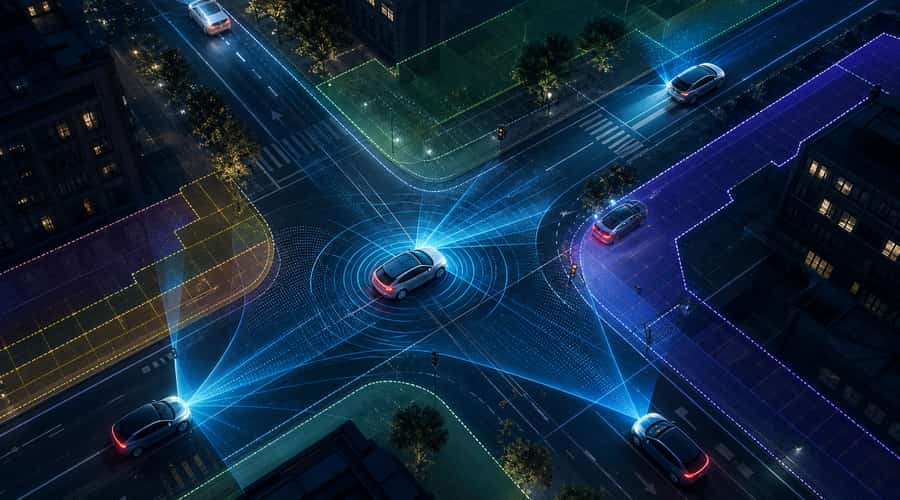
According to Texas Department of Motor Vehicles filings reported by TechCrunch and other outlets, Tesla has registered 42 autonomous vehicles in the state under new rules that took effect on May 28, 2026. Waymo, by comparison, has registered 577. That gap matters because it turns a debate about belief into a debate about deployment. Tesla is no longer being judged only on demos, product events, or Elon Musk’s timelines. It is being judged on vehicles in service.
The original Austin launch still matters. Tesla began robotaxi rides in Austin in June 2025, first with safety monitors in the cars, then moved into unsupervised rides in January 2026. That was a genuine operational milestone. A vehicle carrying paying passengers with no human safety driver inside is not the same thing as supervised Full Self-Driving in a customer’s driveway. It shifts the liability, the regulatory posture, and the business model.
The important update is not that Tesla has a robotaxi service. It is that the first public state-level look at the fleet shows how limited the operation still is nearly a year after launch. A 42-vehicle footprint across Texas is not nothing, but it is far from the kind of rapid ramp Tesla bulls have often imagined.
This is where founders and investors should be careful. Early autonomous deployments often look slow from the outside because the hard work is hidden in maps, edge cases, remote assistance, insurance, vehicle maintenance, city relations, and incident reporting. Waymo spent years building that machinery. Tesla is trying to prove it can skip some of the cost and complexity through a vision-only system trained on huge volumes of driving data.
If Tesla is right, the prize is enormous. Cameras are already built into its consumer fleet, and software can be pushed over the air. That could create a lower-cost path than rivals that depend on lidar, radar, and heavier sensor stacks. But if the Texas fleet stays small, the argument weakens. Cost advantages only matter when they translate into service density, availability, and reliable customer demand.
The gap with Waymo also shows the difference between technical capability and commercial readiness. Waymo’s lead is not just about sensors. It is about operating a transportation service, managing city-by-city approvals, expanding service areas, and keeping vehicles on the road long enough to become part of ordinary mobility. Tesla has the stronger consumer brand and a much larger installed base. Waymo has the larger public robotaxi operation today.
Regulators now have numbers to watch
Texas has long been viewed as a friendly market for autonomous vehicles, but the new reporting framework gives the public a clearer view into who is actually operating and at what scale. That is useful for everyone. Investors get fewer slogans. Cities get better information. Competitors get a benchmark.
It also raises a practical question for Tesla: how much of the robotaxi rollout is constrained by software confidence, regulatory caution, vehicle supply, or operational staffing? A small fleet can be a deliberate safety choice. It can also be a sign that the technology is not yet ready to expand at the pace promised. The filings do not answer that question, but they make it harder to ignore.
For the broader AI market, this is a reminder that autonomy is not like launching a chatbot or an image generator. The product operates in traffic, in weather, around pedestrians, emergency vehicles, roadwork, cyclists, and distracted human drivers. A mistake is not a bad answer on a screen. It is a real-world event with legal and human consequences.
That is why the Austin rollout is still important even at small scale. Tesla is testing whether an AI system trained largely through cameras and fleet data can move from assisted driving into commercial autonomy. If it works, the economics of robotaxis could change quickly. If it does not, the sector may continue to favor slower, more expensive, tightly controlled deployments.
The next signal to watch is not another claim about future coverage. It is active vehicle count, ride volume, service area growth, safety disclosures, and whether Tesla can expand beyond Austin, Dallas, and Houston without leaning on the kind of operational caution that makes the whole model look less disruptive. The robotaxi race is alive. It is just moving at street speed.
Also read: AI data centers are turning water into an investment risk • Monterey Park has turned AI data centers into a local political risk • Meta Is Turning Employee Work Into AI Training Data