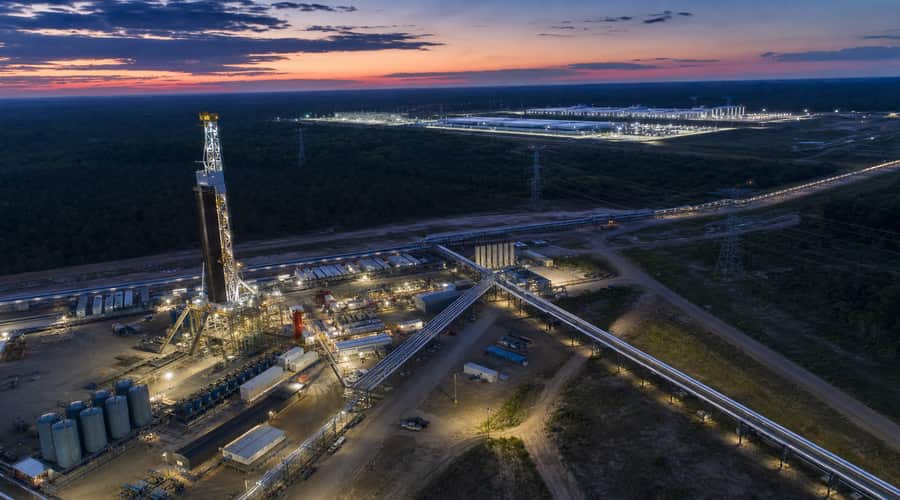

CoreWeave has plenty of customers for AI compute. The harder question is whether contracts signed before the latest component squeeze leave enough room for the memory bill now arriving.
CoreWeave's problem isn't that Microsoft, OpenAI, Meta or Anthropic suddenly stopped wanting GPUs. They haven't. The problem is simpler and more dangerous: the company promised a lot of future compute before the cost of building that compute moved against it.
According to The Wall Street Journal's May 7 report on CoreWeave's first-quarter results, revenue rose to $2.08 billion from $982 million a year earlier, while the company posted a $740 million quarterly loss. Its backlog stood at $99.4 billion at the end of March. That's a huge order book. It also tells you why investors keep circling back to the same question: what happens when the price of the machines needed to serve that backlog rises faster than the revenue those contracts produce?
Demand isn't the issue. Margin is.
MarketWatch noted after the same results that CoreWeave's adjusted operating margin fell to 1% from 17% a year earlier, as the company spent heavily to build capacity. A 1% margin is not a cushion. It's a ledge. When your whole business depends on buying Nvidia systems, securing high-bandwidth memory, lining up power and financing data centers before customers can use them, a small move in component pricing can become the whole earnings story.
The bill moved first
CoreWeave raised the low end of its 2026 capital expenditure forecast in May to $31 billion from $30 billion. The top of the range stayed at $35 billion. The Journal reported that Chief Executive Michael Intrator pointed to an acute shortage of some components over the previous six to nine months. Chief financial officer Nitin Agrawal tied the pressure to the company's growing debt balance too. CoreWeave is guiding for $650 million to $730 million of interest expense in the second quarter. That's a lot of money before you even get to the customer invoice.
The memory piece matters. Nvidia's most valuable AI systems don't run on GPUs alone: they depend on high-bandwidth memory, the stacked DRAM that lets those chips keep up with large model training and inference, and the names to watch there are SK Hynix and Samsung - and Micron, too. If their capacity is tight, cloud providers don't get to talk their way into a discount. They pay. Or they wait, and sometimes lose the deployment window entirely.
A July 8 scenario analysis by Satoshi Matsuoka on arXiv put the 2026 memory squeeze at the center of AI infrastructure economics, modeling a cost gap in which newer fleets face sharply higher bandwidth costs than older, already financed capacity. You don't need every number in that paper to be right. The practical point still holds: a company that signed long-term cloud contracts before the repricing has less room to maneuver once the bill comes due.
Here's the thing: CoreWeave has not publicly said it failed to hedge memory prices. That's analyst concern, not a company confession. Treat it that way. But the concern is legitimate because the public numbers already show the pressure: higher capex, lower operating margin and a backlog that forces CoreWeave to keep building even when components get expensive.
Debt can only do so much
CoreWeave has been unusually good at turning future compute revenue into present financing. MarketWatch reported in April that the company closed an $8.5 billion delayed-draw term loan backed by compute hardware and a major customer contract, part of roughly $28 billion in debt and equity raised over the prior year. That kind of financing buys time. It doesn't make HBM cheaper.
Investors noticed. Barron's reported last week that CoreWeave shares fell hard after reports that Meta might eventually sell excess AI compute into the market, with the stock dropping 14% one day and another 5.5% the next. That selloff wasn't only about Meta. It was about the fear that neocloud economics look wonderful when every rack is scarce and much less forgiving when customers, suppliers and lenders all start asking for their share.
CoreWeave still has a real business. OpenAI signed an $11.9 billion five-year cloud deal ahead of CoreWeave's 2025 IPO, according to Reuters reporting cited in public company histories, and the Journal reported that CoreWeave added major 2026 commitments from Meta, Anthropic and Jane Street. You don't dismiss that. Customers are lining up because they need capacity now, not in some theoretical future.
But you shouldn't confuse backlog with profit. CoreWeave's contracts can fill data centers for years and still leave shareholders exposed if the inputs were priced too gently. Airlines learned that lesson with fuel, food companies with wheat and sugar, and CoreWeave is learning it now with memory, power, servers and interest expense.
Frankly, this is the part of the AI infrastructure boom that deserves more attention than another chart of GPU demand. The question isn't whether companies want compute. They do. The question is who gets paid after Nvidia, memory suppliers, lenders and power providers take their cut.
For CoreWeave, the next few quarters need to prove that May's pressure really was timing, not the first clear view of a thinner business than investors thought they were buying. A company can grow through a bad margin quarter. It can't build a decade of infrastructure on the hope that every input cost calms down before the next bill lands.
Also read: Hinge's Founder Just Bet $18 Million That Swiping Is Broken • OpenAI Is Building a Moveable Screen-Free Speaker as Its First Hardware Product • Australia is rushing to approve AI data centers before backlash grows