Figure AI just gave humanoid robotics a more useful test than another polished demo: a 10-hour contest that showed how close the machine is to a human worker, and how much still has to be proved.
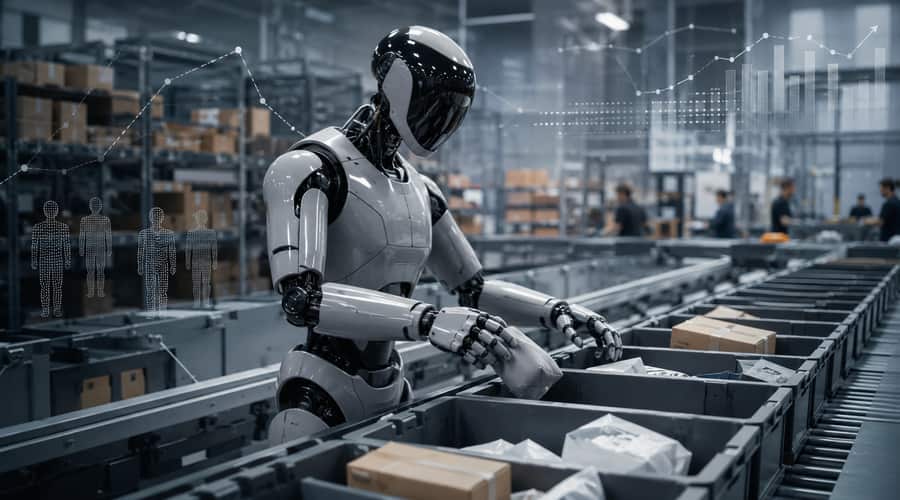
Figure AI has moved its humanoid story away from short clips and into a harder arena, operational proof. The company staged a 10-hour package-sorting contest between a human intern named Aime and its F.03 humanoid robot, Bob, turning a robotics demo into a public test of warehouse labor economics.
The human won, but only just. Published results from the May 18 contest showed Aime sorting 12,924 packages to the robot's 12,732, a margin of 192 packages over 10 hours. That is the useful part of the story. The robot did not beat the person, but it got close enough that the comparison is no longer theoretical.
That matters because the robotics industry has spent years promising endurance, dexterity, and autonomy, yet rarely producing data that looks anything like a normal workday. In this case, the benchmark was not a single pickup, a dance, or a lab task. It was whether a humanoid could keep going through repetitive work that drives logistics economics, and whether it could do so at enough speed and consistency to matter to enterprise buyers.
According to recent coverage from TechRadar, Figure's earlier livestream put three F.03 robots on package-sorting duty for a full eight-hour shift, running on the company's Helix-02 system and handling packages at roughly human pace. Figure founder and chief executive Brett Adcock said the system was operating fully autonomously, and later runs pushed the demonstration beyond a single shift. That sequence is important, because endurance is the real sales pitch for warehouse robotics, not one impressive moment on camera.
What makes the intern-versus-robot format so effective is that it changes the conversation. A robotics demo usually invites people to ask whether the machine can move, perceive, or recover from an error. A shift-length comparison asks a sharper question: can it compete with ordinary labor in the conditions that define fulfillment work? That is the standard enterprise customers care about, because deployment decisions come down to throughput, uptime, supervision, maintenance, and total cost per item.
Figure has been positioning its humanoids for warehouses and manufacturing, two environments where repetition, predictable layouts, and long operating windows make commercialization possible before home robotics or general-purpose service work. As Forbes reported last year, Adcock has talked about a potential path to shipping 100,000 humanoid robots over four years, a target that shows how aggressively the company is pitching scale. A credible endurance test helps support that ambition, because investors and customers need more than videos to believe the hardware can operate as part of a production line.
The latest run also lands at a moment when humanoid robotics is becoming more competitive. Agility Robotics, Tesla, and China's Unitree are all in the race, and the field is crowded with companies that can still make compelling clips but struggle to prove long-duration reliability. In that context, Figure's choice to publish shift-style numbers is a signal that the company wants to be judged like an industrial supplier, not a research lab.
There is still a gap between performance and deployment. The robot's narrow loss makes the case more interesting, not weaker. It shows that humanoids are approaching useful speed on constrained tasks, while also reminding buyers that real logistics centers demand repeatable performance over days and weeks, not one livestream. A machine that can sort packages for hours is impressive. A machine that can do it every day, under pressure, with acceptable error rates and minimal human intervention, is the actual business case.
That distinction is why the intern comparison is more than a marketing flourish. It frames humanoid robotics as labor replacement economics, where the question is not whether the machine is clever, but whether it is cheaper, steadier, and scalable enough to justify deployment. For investors, that kind of disclosure can sharpen the narrative around commercial readiness. For enterprise buyers, it starts to answer the harder question of whether humanoids are finally moving from promise to procurement.
Figure has not solved the whole problem, and nobody serious should pretend it has. But by publishing a real shift test and putting a human worker in the frame, the company has attached measurable claims to the part of robotics that matters most: whether the machine can work long enough, fast enough, and reliably enough to change the math.
Also read: ByteDance's Lance Puts Open, Efficient Multimodal AI Within Reach • Alibaba's Qwen team pushes forward with Qwen 3.7 release amid export-control headwinds • Anthropic's cyber warning is moving into financial regulation