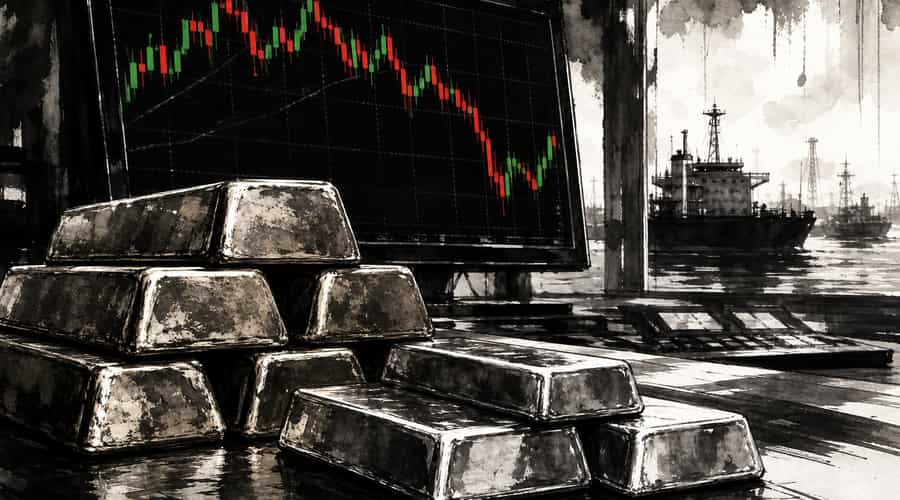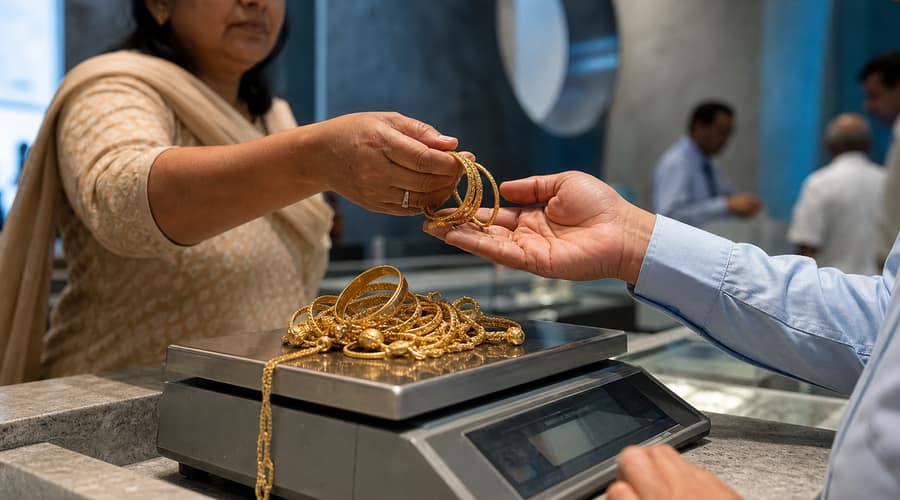
Gold has bounced back from its lowest point in roughly a week, with traders drawing reassurance from falling oil prices and diplomatic signals that the United States and Iran may be edging toward renewed negotiations.
The precious metal's rebound on Wednesday came quietly but meaningfully. After a brief pullback that left prices at their softest in around seven days, gold found its footing as crude oil slipped on reports that backchannel discussions between Washington and Tehran were gaining traction. The logic here is direct: cheaper oil takes the edge off inflation expectations, and when markets feel less panicked about price pressures, gold's appeal as a pure inflation hedge softens slightly. Yet prices still rose. That tells you something about the broader mood in commodity markets right now.
Investors remain deeply uncertain about the global macroeconomic picture heading into the second quarter of 2026. The Federal Reserve has held rates steady, but the language coming out of recent Fed communications has been careful, almost evasive. There is no clear signal that cuts are imminent, and that ambiguity tends to keep gold supported at elevated levels even when a specific catalyst, like inflation anxiety, temporarily fades from the foreground.
The connection between oil and gold may seem indirect, but it runs through inflation expectations in a fairly predictable way. When crude prices fall sharply, as they did in recent sessions on optimism about a potential U.S.-Iran diplomatic thaw, market participants scale back their projections for consumer price growth. That cools demand for inflation-protective assets in the near term. What made Wednesday's session notable is that gold climbed anyway, suggesting that traders are buying on something other than inflation fear alone.
Part of that is safe-haven demand that has nothing to do with prices at the pump. Geopolitical tension in other corners of the world, continued uncertainty around trade policy, and lingering questions about dollar strength have all kept institutional allocations to gold relatively firm. Fund managers who rotated into gold heavily over the past several months are not rushing for the exit just because oil dropped for a couple of sessions.
Iran talks and the commodity equation
The prospect of resumed U.S.-Iran negotiations carries real weight for commodity markets broadly. Iran holds significant oil reserves, and any deal that eases sanctions and allows greater Iranian supply to reach global markets would put meaningful downward pressure on crude over the medium term. That scenario, if it develops, would continue to dampen the inflation narrative that has driven so much of gold's run in recent years.
But seasoned commodity investors are treating that prospect with appropriate caution. Talks between Washington and Tehran have a long history of stalling, restarting, and stalling again. Pricing in a durable diplomatic breakthrough at this stage would be premature. For now, the market is reacting to the mood music of potential negotiations rather than any signed agreement, and mood music has a habit of changing quickly.
Gold is trading in a range that reflects this tension between real yields, geopolitical unease, and shifting energy dynamics. The metal is not surging, but it is not retreating in any meaningful way either. That sideways-with-upward-bias pattern has become something of a signature for gold in this cycle.
What to watch next
The next meaningful move in gold prices is likely to come from one of three places: fresh U.S. inflation data that either confirms or undermines the current benign narrative, a concrete development in the Iran talks that shifts the oil supply outlook in a durable way, or a shift in the Fed's tone at its next scheduled meeting. Any one of those could break gold out of its current range in either direction.
For investors holding gold as a portfolio hedge, the current environment is doing what it is supposed to do. The asset is providing stability and modest appreciation without requiring a crisis to justify its place in the mix. That is actually one of the more constructive arguments for holding gold through uncertain periods: it does not need the world to fall apart to earn its keep. It just needs the world to remain unsettled, and on that count, 2026 is delivering.
Watch the oil market closely over the coming weeks. If crude continues to slide on Iran optimism, gold will face some headwinds in the near term. But unless something fundamentally changes in the rate environment or a major risk-off event triggers a flight to safety, the floor under gold looks solid enough to keep this recovery intact.
Also read: Gold Hits $3,200 an Ounce: Why Investors Are Piling Into Safe Havens Right Now • Gold Hits $3,200 an Ounce: Why Investors Are Piling Into Safe Havens Right Now • Big 8 Banks Are Quietly Covering Precious Metal Shorts