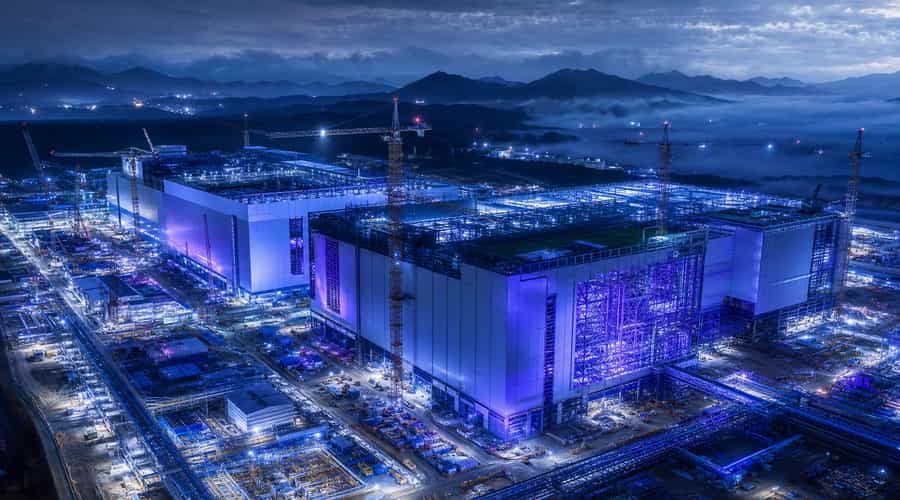
SK Hynix has taken Samsung's crown on the KOSPI because AI buyers don't care about old memory rankings. They care who can ship HBM, and right now that answer is painfully clear.
Samsung Electronics is still the name most readers know first, but the AI memory race has stopped rewarding history. SK Hynix overtook Samsung Electronics this week to become South Korea's most valuable listed company, the first time Samsung has lost the top spot on the KOSPI since November 2000, according to Reuters reporting cited by Tom's Hardware.
That is the story you can verify. The claim that Samsung and SK Group committed more than 1,000 trillion won at a June 29 meeting in Seoul doesn't hold up today, June 28, 2026. June 29 hasn't happened yet, and searches for the named meeting, the Gwangju semiconductor cluster, and the reported 1,000 trillion won commitment turn up nothing credible. You don't build a published article on a future meeting that can't be sourced. You write the live story in front of you.
And the live story is uncomfortable for Samsung. SK Hynix closed up 5.6% after its market capitalization reached 2,080.4 trillion won, about $1.35 trillion, edging past Samsung's 2,066.7 trillion won when preferred shares are excluded. Samsung disputes that framing, telling Reuters its preferred shares should be included, which would lift its value to 2,246.4 trillion won. Fine. Include them if you want. The market's message is still hard to miss.
Investors are paying for HBM. SK Hynix held 61% of the global high-bandwidth memory market in 2025, against 21% for Micron and 17% for Samsung, according to figures reported by Tom's Hardware. That gap explains far more than any grand industrial pledge would. HBM is the memory stacked next to Nvidia's AI accelerators, and the supplier that wins those sockets gets pricing power, long customer ties, and a cleaner story for investors than commodity DRAM can offer.
Samsung's problem isn't that it forgot how to make memory. It remains a giant in conventional DRAM, smartphones, displays, foundry work, and consumer electronics. The problem is that AI infrastructure has narrowed the field of vision. When Nvidia, cloud builders, and server makers are scrambling for high-margin HBM, Samsung's wider empire starts to look less like diversification and more like distraction.
Samsung needs the next round to look different
SK Hynix built this lead by staying with HBM through the 2023 downturn, when the memory crash pushed it to a 7.73 trillion won annual operating loss. Samsung, by contrast, ran into reported yield and qualification delays on HBM3E parts, slowing its path into major Nvidia orders. That is the kind of miss that follows a company around. You can be the world's best-known memory maker and still lose the product cycle that matters most.
The next fight is HBM4. Tom's Hardware reported that Nvidia CEO Jensen Huang said Samsung, SK Hynix, and Micron have all passed HBM4 certification for Nvidia's Vera Rubin platform. Samsung also shipped 12-layer HBM4E samples on May 29. That gives Samsung a real opening, not a slogan. If it turns those samples into volume orders, the market can change its mind quickly. If it doesn't, SK Hynix's lead stops looking like a hot streak and starts looking like a structural shift.
You should also watch capacity, because this race is not only about who has the better press release. Bank of America estimates cited by Tom's Hardware put SK Hynix's monthly DRAM output at roughly 589,000 wafers this year, compared with Samsung's 691,000. SK Hynix is projected to expand output by about 38% from 2025 to 2028, while Samsung is expected to grow 17.5%. That would narrow the production gap to under 10% by 2028 from about 23% in 2025.
Here's the thing: Samsung doesn't need to win every memory category to repair the damage. It needs to prove that the AI server market has not permanently assigned the best HBM economics to SK Hynix and Micron. The old Samsung advantage was scale. The new one has to be qualification, packaging, yield, and delivery against the roadmaps Nvidia and its customers actually use.
That is why this week's market-cap flip matters. It isn't just a ranking change on a Korean exchange. It is a blunt vote on who investors believe is closest to the AI buildout. Samsung can argue over the share-count math, and on preferred shares it has a fair point. But you don't fix an HBM gap with accounting. You fix it by shipping the chips customers are waiting for.
Also read: Baidu's Kunlunxin is chasing a $50 billion Hong Kong IPO with a condition investors have rarely seen • Google DeepMind is losing the researchers who built its best work and the damage is already showing • Suno's Spark artist grants come with a permanent silence clause that says more about the lawsuit than the music