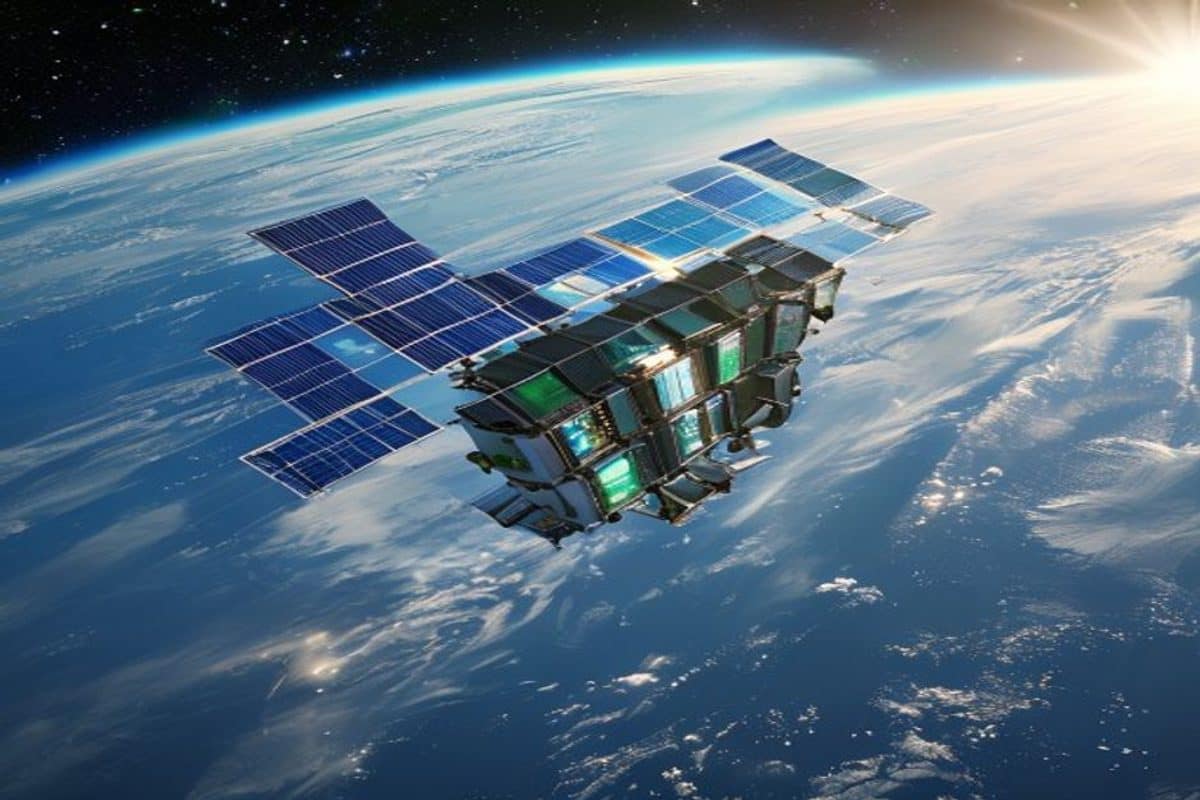
A newly public SpaceX regulatory filing questions whether AI-focused space data centers can ever turn a profit, throwing a bucket of cold water on one of venture capital's hottest emerging bets.
The hype around orbital computing has been building for years, fueled by real constraints , terrestrial data centers are energy-hungry, land-scarce, and increasingly difficult to cool. Space, in theory, offers infinite solar power, natural cooling, and freedom from zoning boards. Startups like Lumen Orbit and Ramas have attracted serious capital on exactly that premise. But a regulatory filing released this week from SpaceX, the company that controls a commanding share of global launch capacity, suggests the economics simply don't hold up yet , at least not for the high-density AI workloads everyone is chasing.
The document, made public on April 22, lays out SpaceX's skepticism in blunt terms. The company points to an absence of proven demand for space-based AI training or inference at any scale that would justify the capital required to put that hardware in low Earth orbit. Crucially, this isn't a dismissal of space computing as a concept , it's a narrower, more damaging critique aimed at the specific commercial case for AI workloads in orbit. The distinction matters enormously for investors who have been underwriting that exact use case.
This isn't a skeptical analyst note or a short-seller thesis. SpaceX is the landlord of the launch market. Without access to affordable, reliable rocket transport, space-based server projects don't get off the ground , literally. When the dominant launch provider signals reluctance about the commercial logic of a payload category, it introduces a new layer of friction for every startup in that space. Lenders and limited partners who assumed SpaceX would be a willing infrastructure partner now have a more complicated conversation ahead of them.
The filing also puts a spotlight on a problem the sector has largely glossed over: hardware refresh cycles. On Earth, swapping out a GPU cluster when a better chip arrives is expensive but manageable. In LEO, it requires another launch, another set of integration costs, and a level of logistical coordination that can easily run into the hundreds of millions. The economics of orbital computing look attractive in static models but deteriorate quickly once you factor in the pace at which AI hardware generations turn over.
What this means for the broader space cloud market
Amazon Web Services has been quietly building out ground station infrastructure for years, positioning itself for a world where satellite data processing becomes routine. But even AWS has moved cautiously on the orbital compute side, focusing instead on the terrestrial-to-satellite data pipeline rather than putting servers in orbit. SpaceX's filing implicitly validates that conservative posture.
For the startups most directly exposed , those that have raised on the promise of deploying AI inference clusters in space , the filing is not a death sentence but it is a forcing function. The companies that survive this reassessment will likely be those that can demonstrate concrete, paying customers willing to commit to space-based compute for specific applications: Earth observation processing, defense intelligence workloads, or scenarios where latency to a satellite network genuinely beats routing data back to the ground. Broad-market AI training in orbit, the sexier pitch, looks considerably harder to defend.
Investor sentiment in the new space economy has been remarkably durable through a period when broader tech valuations corrected sharply. A skeptical filing from the sector's most powerful infrastructure player won't crash the category overnight, but it does shift the burden of proof. What to watch next is how the affected startups respond , whether they tighten their commercial focus and produce credible customer commitments, or whether the funding environment tightens around them before they get the chance.
Also read: OpenAI's GPT-Image-2 faces its sharpest stress test yet as the President Test goes viral • Millions are asking ChatGPT to render New York and Los Angeles in 2126 and the results are reshaping how ordinary people picture the future • Meta is harvesting mouse movements and keystrokes from 25,000 engineers to train AI that could replace them