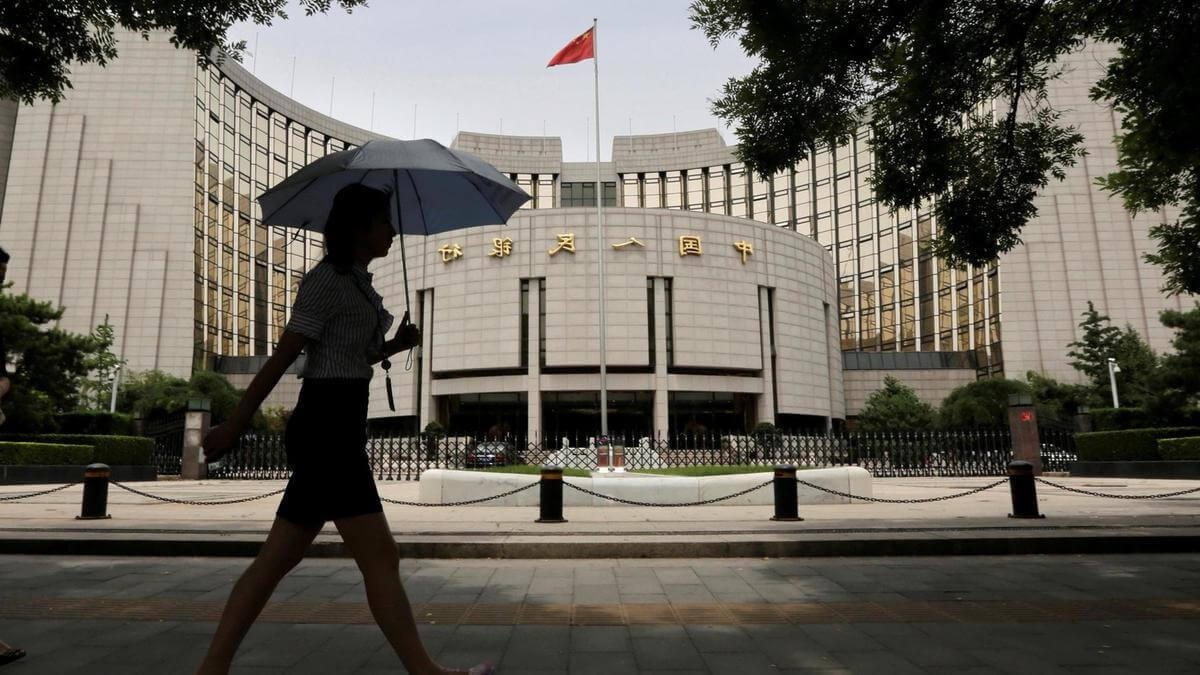
China's central bank digital currency is ready for prime time, marking a significant escalation in the global race to build the next generation of financial infrastructure.
The People's Bank of China has officially declared its digital currency project ready for deployment. According to Mu Changchun, deputy director of the bank's payments department, a working prototype that incorporates blockchain architecture has been developed successfully after five years of concentrated research and testing.
His announcement, delivered at the China Finance 40 forum and reported by local outlet Shanghai Securities News, represents the most definitive statement yet from Chinese authorities on the readiness of their central bank digital currency, commonly referred to as the digital yuan or DCEP (Digital Currency Electronic Payment).
The significance of this milestone extends well beyond China's borders. As governments around the world grapple with the implications of digital assets, China has moved from theoretical discussions to a working product. While other major economies are still studying the concept, China has been running pilot programs in major cities including Shenzhen, Suzhou, and Beijing, distributing millions of dollars in digital currency to residents through lottery-style giveaways.
A Two-Tier System Built for Scale
The architecture behind China's digital currency reflects a pragmatic approach to the unique challenges of serving a population of 1.4 billion people. According to Mu, it would be impractical to issue a digital currency using a pure blockchain architecture in a country as large as China, where retail transactions demand high throughput and competitive performance.
Instead, the digital currency will operate on a two-level system. The PBoC sits at the top level, issuing the digital currency to commercial banks. Those banks then distribute it to the public. This structure is designed to address what Mu described as "the complex economy of the country with a large territory and a large population." The approach keeps the central bank in control of money supply while leveraging the existing infrastructure and customer relationships of commercial banks.
This two-tier model carries several advantages. It improves accessibility by working through familiar banking channels, increases adoption rates among a public that already relies heavily on mobile payments through platforms like Alipay and WeChat Pay, and fosters innovation among commercial entities that can build new services on top of the digital currency infrastructure.
Built for Everyday Commerce
The PBoC executive emphasized that the digital currency has been specifically designed for "high-frequency commercial scenarios for small-scale retail sales." This means buying groceries, paying for transportation, settling restaurant bills, and the countless other daily transactions that make up the bulk of economic activity.
This focus on retail payments positions the digital yuan as a direct competitor to the dominant mobile payment platforms in China. Alipay and WeChat Pay currently control over 90 percent of the mobile payments market, and the central bank has made no secret of its desire to break this duopoly.
The timing of the announcement also carries geopolitical weight. As reported by Cointelegraph, the PBoC has been working to outpace American efforts and Facebook's Libra project by publishing a national cryptocurrency first. While US politicians have struggled to develop a coherent regulatory framework for digital assets, China has forged ahead with development, viewing digital currency as both a technological imperative and a tool for extending its influence in global finance.
The international implications are substantial. A successful Chinese central bank digital currency could eventually be used for cross-border settlements, potentially reducing dependence on the US dollar-dominated SWIFT system that currently underpins global trade.
Despite Mu's optimistic assessment and the progress made through pilot programs, an official launch date remains unconfirmed. The transition from successful pilots to nationwide deployment involves enormous technical and logistical challenges. Scaling a digital payment system to serve the world's largest population requires fault tolerance that can only be proven through extensive real-world testing.
What is clear, however, is that China has moved beyond the experimentation phase. The question is no longer whether a major economy will launch a central bank digital currency, but how soon, and what the ripple effects will be for the global financial system. Other central banks, from the European Central Bank to the Bank of Japan, are watching closely. The decisions China makes in rolling out its digital yuan will shape the trajectory of sovereign digital currencies for years to come.