
Eclipse Fi raised $1.9 million and sold out its token generation event in seconds, betting that a cross-chain launchpad built on Cosmos can fix the user experience problems holding back most token launch platforms.
Eclipse Fi, a modular multi-chain launch protocol built on Cosmos and integrating with leading Layer-2 protocols, has closed a $1.9 million funding round and completed a token generation event on December 22 that sold out in seconds. The raise signals growing investor confidence in platforms that aim to simplify cross-chain participation for retail users.
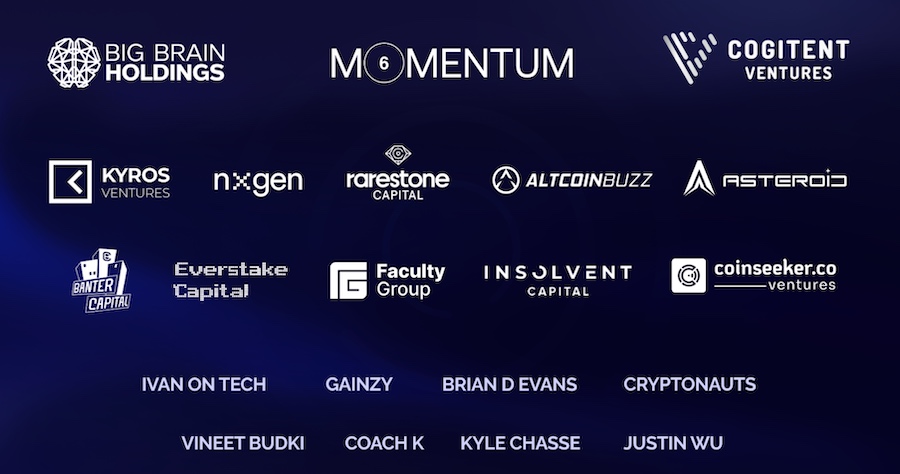
The fundraise reflected the ethos Eclipse has been building from the start: a fair cap table assembled from a diverse group of leading Web3 venture capital firms, angel investors, and influential voices in the space. Participants include Big Brain Holdings, Rarestone Capital, Momentum 6, NxGen, Crypto Banter, Cogitent Ventures, Token Metrics, Kyros Ventures, Faculty Group, Master Ventures, Ivan on Tech, Brian D Evans, Danish Chaundry, Gainzy and more. By distributing ownership across a wide network rather than concentrating it among a handful of large funds, Eclipse is positioning itself as a community-first platform from day one.
The announcement capped off a strong year of business development for the project. Over the past twelve months, Eclipse secured more than 35 partnerships and collaborations, built a robust pipeline of projects for its inaugural launchpad lineup, cultivated an extensive key opinion leader network, attracted 200,000 testnet participants, and grew its community to over 250,000 members across social media platforms. Those numbers matter in the launchpad space, where community size and engagement directly determine the success of token launches.
What separates Eclipse from other launchpads is its approach to the cross-chain user experience and the sustainability issues that plague most token launch platforms. Rather than forcing users to navigate fragmented chains and confusing bridge mechanics, Eclipse uses innovative features like Smart Accounts and a cross-chain architecture designed to simplify the entire user journey from discovery to participation. The platform is also committed to deep ecosystem building, selecting the Cosmos ecosystem as its home base on the Neutron blockchain while expanding to emerging Layer-2 networks like Mantle, Linea and Base. These ecosystems hold immense potential for robust foundations and collaborative growth, giving Eclipse a strategic foothold in some of the most active development environments in the industry.
Eclipse Founder Simon Chadwick put it plainly: "We have spent nearly two years developing a token launch model that is sustainable and focuses first and foremost on community. Eclipse removes many of the hurdles seen in most launchpads, while providing the incentives across stakeholders to remain active participants in both our internal community and each respective project's communities. In summary, we are offering the simplicity of Web2 for the future of all Web3 token launches, an experience we coined 'onboard your grandma.'"
Beyond the core launch mechanics, the platform introduces several features not commonly found in the launchpad space. Eclipse deploys the first application of fully decentralized privacy-preserving zk-KYC, a modular toolkit for customizable community-aligned launches, on and off-chain reputation scoring, and a comprehensive due diligence process for prospective projects. These features address some of the most persistent criticisms of token launch platforms, namely the lack of vetting, transparency, and accountability that has historically left retail participants vulnerable.
Eclipse's native token $ECLIP had its TGE on December 22 after rapidly selling out in initial decentralized exchange offerings across EnjinStarter, Neutron, Impossible Finance, SpartaDex, and GameFi. The token launched with listings on Astroport, the leading decentralized exchange on Cosmos and Neutron, Camelot DEX on Arbitrum, and Gate.io. Token holders can immediately stake their $ECLIP tokens following the launch, giving them the ability to participate in upcoming token launches on the platform.
The launchpad space has seen a surge of competition as new projects recognize the value of providing structured token launch experiences. Eclipse's focus on cross-chain accessibility and user-friendly design reflects a broader shift in the industry toward platforms that prioritize the end user experience rather than catering exclusively to sophisticated participants who are comfortable navigating complex multi-chain workflows. If the project can deliver on its promise of making token launches as intuitive as mainstream web applications, it could carve out a meaningful position in an increasingly crowded market.