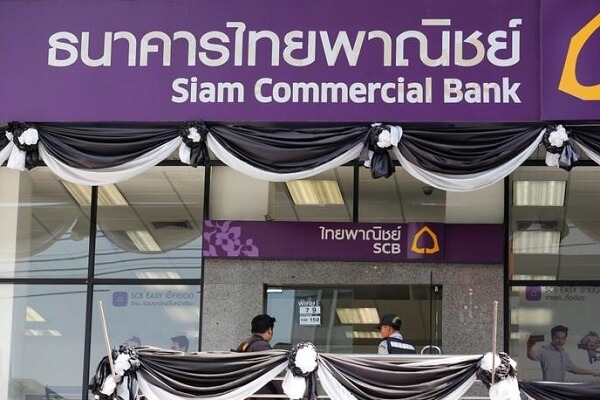
Siam Commercial Bank has officially integrated Ripple's xCurrent technology for cross-border transfers through its Easy Pay application, confirming months of speculation but disappointing XRP token holders in the process.
Siam Commercial Bank of Thailand uses Ripple for cross-border payments with the Easy Pay application. That has been confirmed in an update on its website. There has been speculation about this news for several months. Now there is finally clarity. They also provide a complete description of how the technology is used and implemented.
The application allows SBC Thailand customers to easily send money to countries such as the United States, United Kingdom, Germany, France, Italy, Spain and Singapore. Payments to the United Kingdom and Singapore are even made in real time. The SBC has been around for over 100 years and is the third largest bank in Thailand.
A few months ago, the SBC announced that they would use Ripple. At that time, xRapid was named as the company's technology. This is a payment system in which the XRP token plays an important role. However, today it was officially announced that it is xCurrent. There are no benefits for XRP holders.
This is a point of hate for many people who own XRP coins. xCurrent is just the system that banks can use to commit. Payments where XRP can be used are not included in this piece of technology. Therefore, this collaboration does not immediately lead to an additional demand for the currency. You can see it as a disappointment for fans who had high expectations of this collaboration.
The distinction between xCurrent and xRapid matters more than most observers realize. xCurrent enables banks to send messages and settle transactions across borders instantly, but it does not rely on any digital asset to facilitate those transfers. xRapid, on the other hand, uses XRP as a bridge currency to provide liquidity between fiat pairs that may not have a direct trading relationship. Banks can adopt one without the other, which is exactly what Siam Commercial Bank has done.
For Ripple the company, the partnership is still a significant win. Getting a century-old institution with millions of retail customers to build a product on your infrastructure validates the enterprise strategy that Ripple has pursued for years. It signals to other conservative financial institutions that blockchain-based payment rails are production-ready, not just experimental.
The cooperation between the bank and Ripple goes back to 2016. The chief technology officer, Colin Dinn, says he believes that banks that are not going to use the blockchain technique will have a very difficult time.
"We saw that it offers a solution in which the client is central. Offer something our customers want. It was not something that we as a bank wanted to promote. With Ripple we have found a way and a partner in which we can work very differently from what we are used to. We have ambition and we want to do things differently and change. We see that a bank will be less relevant for customers in the coming years."
Dinn's candor is striking. A senior executive at one of Southeast Asia's largest banks is openly acknowledging that traditional banking risks irrelevance if it fails to adapt. That kind of language would have been unthinkable from a bank executive just a few years ago, and it speaks to how quickly the competitive landscape has shifted.
Thailand's financial sector has been particularly receptive to blockchain innovation. The Bank of Thailand has actively encouraged experimentation through its regulatory sandbox, allowing institutions like Siam Commercial Bank to test distributed ledger solutions in a controlled environment before rolling them out to consumers. This supportive posture from regulators has made the country something of a proving ground for cross-border payment technology in Asia.
The broader implication here is straightforward. Banks are warming to blockchain infrastructure, but they are being selective about which components they adopt. Settlement speed and messaging are attractive. Digital assets that introduce price volatility into the equation, less so. XRP holders hoping that every Ripple partnership translates directly into token demand are learning that lesson the hard way.
What to watch next is whether Siam Commercial Bank eventually migrates from xCurrent to a solution that incorporates XRP, or whether the current arrangement becomes the template for how large banks engage with Ripple. If the latter, the company's enterprise business will continue to grow while the token's utility thesis remains untested at scale.