
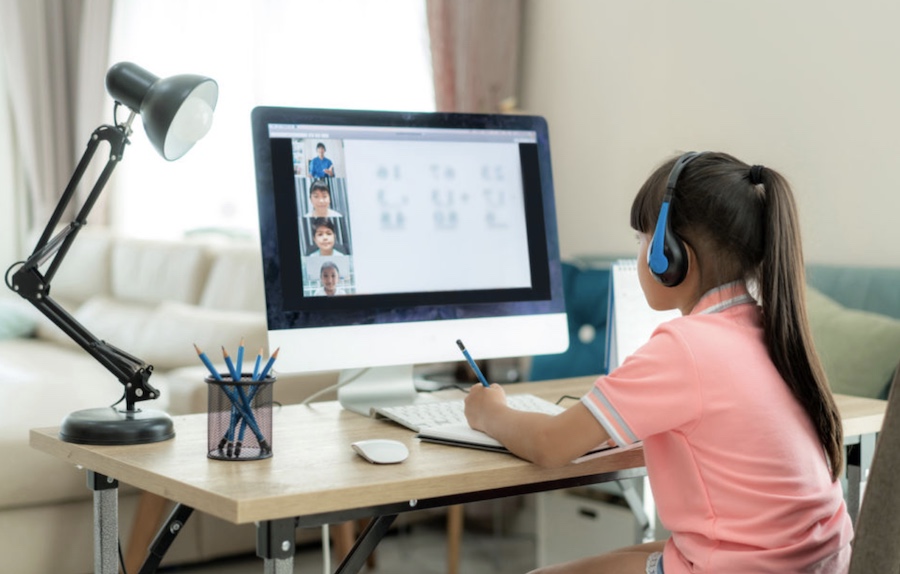
The pandemic forced education online overnight, and while the transition was painful for students, teachers, and parents alike, it created a lasting shift that will reshape how India learns and works for years to come.
The pandemic tested us on every possible front. Individuals and businesses around the world changed how they live, work, and attract customers. One of 2020's biggest frustrations was the abrupt closing of educational institutions, including schools and colleges, with no clear timeline for when doors might reopen.
Education had suddenly shifted to online mode, and everyone suffered in the loop. Instructors struggled to adapt to virtual classrooms, particularly those who were not tech-friendly. Teaching through a screen requires an entirely different skill set than managing a physical room full of students. We all understood, perhaps for the first time, just how demanding the teaching profession truly is. Children lost their physical spaces for socialization and interacting with the world. Their education got limited to a screen, which was difficult to cope with at any age, let alone as a child developing critical social skills. The routine for parents also changed dramatically. Things became even more difficult for parents who were simultaneously managing their own remote work while supervising their children's learning.
But amongst the suffering of so many, there lay genuine benefit for some. With attention shifting sharply toward e-education, the edtech space blossomed. As The Economic Times documented, around five edtech firms secured funding rounds of $100 million or more during the April to September period alone. Investors recognized that the forced migration to digital learning was accelerating adoption that might otherwise have taken a decade.
Decacorn Byju's saw its user base grow by over 20 million during the pandemic. Unacademy also took a strong lead in this direction, expanding its reach and course offerings. Many more e-education startups sprouted, each targeting different segments of the learning market, from K-12 tutoring to professional upskilling. The momentum was undeniable.
Though we can all agree on one fact, that online teaching and learning will never fully substitute the physical classroom experience, the scale of change the pandemic brought cannot be ignored. We cannot deny that a large chunk of the education sector will be relying on e-education long after COVID-19 fades. The genie, as they say, is not going back in the bottle.
As newer institutions come up and introduce more online courses, this shift will create opportunities in both the education system and the broader job market. People in small towns will gain access to job opportunities that previously existed only in major cities. Content creation, video editing, instructional design, platform management, and student support roles are all growing demands that do not require someone to live in Mumbai or Bangalore.
The primary online modes of teaching and learning in India during the pandemic were majorly Zoom and Google Meet. These platforms are now adapting themselves to cater to the specific needs that the education system will require moving forward. As anyone watching this space can see, the coming period is going to be a blend of online and offline education, a hybrid model that combines the best of both worlds.
For edtech companies, the real test begins now. The urgent demand that drove adoption during lockdowns is softening as schools reopen. The companies that survive will be those that prove their value beyond crisis mode, offering something classrooms cannot easily replicate. Personalization, accessibility, and scale remain the three pillars where digital learning holds a genuine advantage. Those who build around those strengths will shape the next chapter of Indian education.