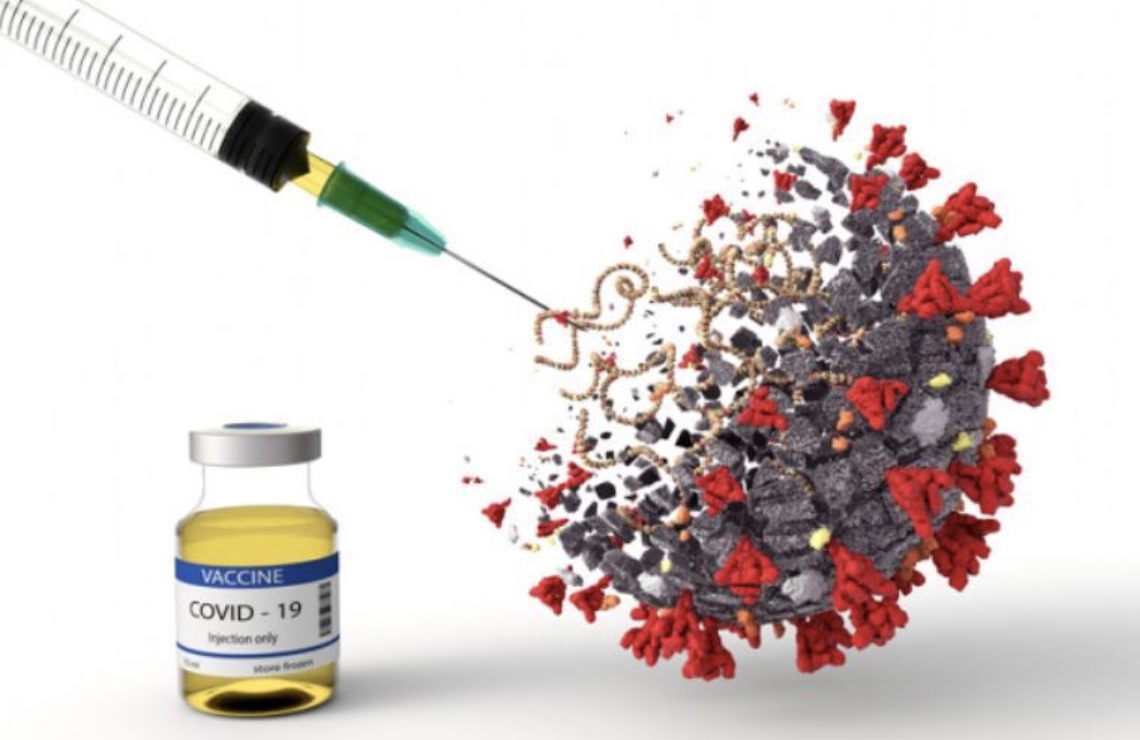
Under the short period of 11 months, Moderna is set to deliver a vaccine for COVID-19 with 94.5 percent efficacy in clinical trials. It is in itself a big achievement. But what makes its accomplishment more astonishing is that the company started less than a decade ago. It went public only two years ago.
While the general investment climate was not the best a decade ago, its effect on Moderna was minimal as the startup was an in-house effort. Founded in 2010 by a team of scientists and entrepreneurs, the company grew out of a Flagship Pioneering lab, where the earliest experiments with synthetic messenger RNA took shape. The timing was far from ideal. Venture capital had tightened after the financial crisis, and biotech was considered a slow, capital-intensive gamble. But Moderna did not have to pitch outside investors in those early days. It had internal backing and the freedom to chase an idea that most of the pharmaceutical industry considered too risky.
There are roughly 1300 employees working in Moderna. But it still has the culture which is typical to strong startups: fearlessness around trying something new and taking risks. That culture proved to be a decisive advantage when the pandemic hit. While larger pharmaceutical companies scrambled to redirect resources and navigate internal bureaucracy, Moderna moved with speed that surprised even seasoned industry watchers. From the moment Chinese scientists published the genetic sequence of the novel coronavirus in January 2020, Moderna designed its vaccine candidate within just two days. By March, the first batch was already in clinical trials. By November, the company had phase three data showing 94.5 percent efficacy, a figure that stunned researchers who had hoped for something closer to 60 percent.
According to the co-founder Noubar Afeyan, who was also the early backer of the company, "it's a powerful reminder of what is possible when we journey forth, armed with propositions that may-in just a decade-go from outrageous, to obvious, to lifesaving."
He further said, "The pandemic, if it did nothing else, it gave us the ability to prove everything from soup to nuts in a short time frame."
Just like almost every biotech involved in clinical trials, Moderna too faced disappointing results many times. But specialization also benefited the company in tackling COVID-19. Moderna remained focused since inception on a single area: messenger RNA (mRNA) therapeutics and vaccines. This narrow focus meant that when the moment demanded rapid action, there was no distraction, no divided attention. Every researcher, every dollar, every experiment was already aligned toward the same goal of making mRNA work in humans.
In its earliest trials, Moderna had used mRNA to show it could stimulate an immune response in humans. The company has worked on 10 human vaccines along with 10 non-vaccine products. Not all of them succeeded. Some programs were quietly shelved. Others produced data that sent the stock price tumbling. But each failure taught the company something about how synthetic mRNA behaves inside the body, how to stabilize it, how to deliver it into cells without triggering destructive immune reactions. Those lessons accumulated over a decade and became the foundation for the COVID-19 vaccine that would change everything.
The broader implications of Moderna's success extend well beyond a single vaccine. What the pandemic demonstrated is that mRNA technology can move from concept to clinical proof in months rather than years. That has enormous consequences for how we prepare for future outbreaks, whether viral, bacterial, or otherwise. Traditional vaccine development relies on growing weakened or inactivated viruses in massive bioreactors, a process that takes months just to produce the raw material. mRNA skips that entirely. Scientists synthesize the genetic code in a lab, wrap it in a lipid coating, and inject it. The body becomes its own factory, producing the viral protein that triggers immunity. It is faster, more flexible, and potentially far cheaper at scale.
According to Afeyan, health security should be compared to the way we think about military spending. A lot of funds are being spent on weapons systems. Apart from that a big amount is also spent on monitoring, security, intelligence and other functions so that we don't need to use those weapons. The same should also be thought in the direction for spending on health.
He concludes, "We think society's going to have to shift capital and incentives to getting ahead of disease."
Health security needs all our knowledge. It is very important to look at the conditions manifested before any sickness as it involves a long period when bodies go through patterns of alternation. The next pandemic is not a question of if, but when. What Moderna has shown is that with the right technology, the right focus, and the willingness to bet on ideas that sound outrageous at first, the response can be faster than anyone imagined possible.