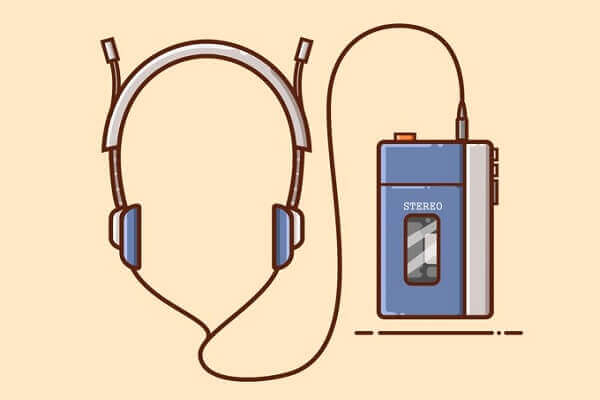
Sony reinvents the Walkman on its 40th anniversary, proving that premium portable audio still has a place in a smartphone-dominated world.
40 years ago, when the world economy suffered the second oil crisis, in the month of July, Sony unleashed a dark blue shiny device into the world, a machine with thick silver buttons, the Walkman TPS-L2. With an insane price of 33,000 yen, the first-generation Walkman could not record, but its stereo music playback function quickly captured hearts in Japan and then the world.
It had two headphone jacks, labeled "children" and "dolls," to allow two people to listen simultaneously. A bright orange "direct line" button could be pressed to decrease the volume while the couple was chatting. The device was social by design. Co-founder Masaru Ibuka wanted to listen to music on long flights and asked his engineers to create something portable. What emerged was not just a product but a cultural shift.
After a disappointing first month when only 3,000 units were sold, sales exploded and finally reached 1.5 million worldwide for the first model. The second model, the WM-2, which came in red, black and silver, registered sales of 2.58 million. Retailers could not keep shelves stocked. The idea of carrying your music with you, anywhere and everywhere, was intoxicating.
Over the next four decades, Sony sold more than 420 million "Walkman" and stopped counting the number of models it had produced when it reached the 1,000 mark, about 15 years ago. The Japanese electronics giant chose the name in part because of Superman's popularity at the time and the fact that it was based on an existing audio recorder called "Pressman." The branding was instant and powerful. So powerful, in fact, that it transcended commerce entirely.
Since then, the word "Walkman" has entered into everyday language, but the device was initially called "Soundabout", "Stowaway" or "Freestyle" in some parts of the world. Over time, Sony standardized the name globally. By the mid-1980s, "Walkman" had become a generic term for any portable cassette player, much to the frustration of competitors who could not replicate the brand loyalty Sony commanded. The company had achieved something few brands ever do: its product name became a verb and a noun in everyday conversation.
Sony continued production of the Walkman cassette tape until 2010, long after the technology had been first surpassed by Compact Disc in the 1980s and MiniDisc Walkman in 1992. The MiniDisc, in particular, was enormously popular in Japan and parts of Asia but never quite caught on in Western markets. For many consumers outside those regions, the cassette Walkman remained the defining portable audio experience well into the late 1990s.
Like many in the industry, the Japanese firm was shaken by the appearance of Apple's iPod when suddenly a listener's entire music collection was available on the move. The iPod did not just compete with the Walkman. It redefined the category Sony had invented. Apple understood that the future was digital convenience: thousands of songs in your pocket, effortless syncing, and a click wheel that made navigation intuitive. Sony, burdened by its legacy hardware mindset and proprietary formats like the ATRAC codec, could not respond quickly enough.
But Sony has struggled to keep up and the latest high-end versions cost more than $2,000 and are more like a smartphone with flash memory and high resolution audio, far from the first generations. These premium devices are built for audiophiles who want dedicated music players with superior digital-to-analog converters, balanced audio outputs, and support for high-resolution formats that smartphones still struggle to reproduce faithfully. The target audience has narrowed considerably, but the willingness to pay has increased.
The nostalgia premium is real. A first edition of Walkman presented as new and never used recently sold for 1.3 million yen, 40 times its initial price. Collectors and technology enthusiasts are willing to pay extraordinary sums for pristine examples of the device that started it all. That price reflects more than scarcity. It reflects the emotional weight of a product that changed how people experienced music.
The Walkman's 40-year journey is a study in how a single product can create a category, dominate it, lose it, and then find a second life in a niche. Sony may never sell 420 million units of anything again, but the Walkman brand endures because it represents something bigger than technology. It represents the moment music became personal.